My Granddaughter Called Me Close to Midnight With Her Voice Trembling and Said, “Grandma… Mom Hasn’t Woken Up All Day,” and by the time I reached the house, the lights were still on, dinner was untouched, and the silence inside felt so wrong that I knew this was not just an ordinary family emergency, but the beginning of something far more disturbing
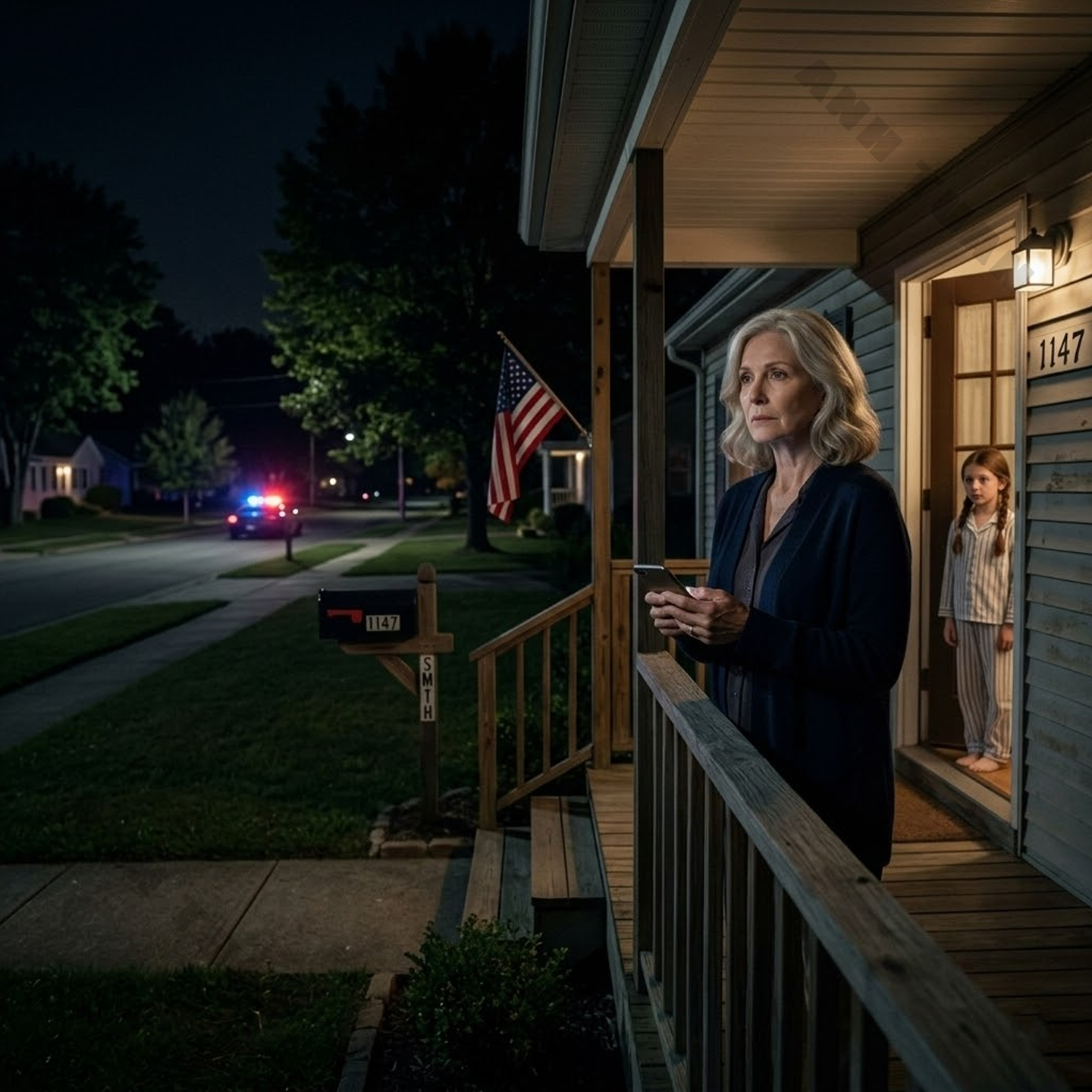
My phone rang at 11:47 p.m.
At sixty-four, late-night calls have a weight to them that younger people still think they can outgrow. They cannot. By that age, you have already learned what an unexpected ring after dark usually means. It means someone is in trouble, or someone is gone, or someone is about to say a sentence that divides your life into before and after. Even now, I can still see the pale blue glow of my phone on the nightstand in my guest room in Litchfield Park, Arizona, cutting through the dark like a blade.
For one suspended second, I only stared at it.
Lily.
My granddaughter never called that late.
I was already reaching for the phone before my mind caught up with what my body knew. My heart was pounding so hard it seemed to shake the mattress. The digital clock beside the lamp read 11:47 in sharp red numbers, and I remember thinking, with a strange useless clarity, that I had forgotten to buy coffee filters that afternoon. It is funny what the mind does when it wants to delay dread by even half a breath.
“Lily?” I said the moment I answered.
Her voice came through so thin I almost did not recognize it. It sounded like paper trembling in someone’s hand.
“Grandma… Mom hasn’t woken up all day.”
There are sentences that land in the body before they land in the mind. That one hit me like a fist straight through the ribs. I sat up so quickly the old mattress groaned under me, my knees already swinging toward the floor.
“What do you mean she hasn’t woken up?” I asked. I tried to keep my voice level. Panic is contagious, and the last thing an eight-year-old child needs is an adult unraveling into her ear.
“I tried,” she whispered. “I knocked on her door this morning. And after lunch. And after dinner. She didn’t answer.”
A cold sensation started at the base of my spine and moved upward, slow and deliberate, like ice water finding its way through cracks.
“Where are you right now?”
“In my room.”
“Is your mom’s door closed?”
“Just a little open.”
I pushed aside the blanket and stood. The tile floor was cool beneath my feet. I had gone to bed in an old University of Arizona T-shirt and flannel sleep pants, and for one ridiculous moment I thought, I should put on a bra before I leave. Then I nearly laughed at myself, because fear has no patience for ordinary standards of presentation.
“Okay,” I said as gently as I could. “I need you to do something for me, sweetheart. I need you to walk over there and see if she’s breathing.”
Silence.
I could hear only the tiny static of the line and Lily’s breathing, shallow and quick.
Then she spoke again, softer than before. “I can’t.”
“Why not?”
“She told me not to come in.”
“When?”
“Yesterday.”
My fingers tightened around the phone so hard my knuckles hurt.
“What exactly did she say?”
“She said she had a headache and needed to sleep. She said not to bother her.”
My daughter, Alyssa, was a nurse at Banner Estrella. She had worked long shifts for years. She knew what exhaustion felt like, what dehydration felt like, what migraines felt like. She also knew what it meant to be responsible for another human being. She would never sleep through an entire day with Lily home and never, not once in her life, had she shut that little girl out in a way that left her frightened. Alyssa was many things. Careless was not one of them.
“Lily,” I said, already moving toward the closet for my jeans, “can you see your mom from where you are?”
“No. The lights are off.”
“Turn on the hallway light.”
“I don’t want to.”
“Why?”
Her breathing hitched. “I’m scared.”
That word lodged in my chest and stayed there.
“You’re okay,” I told her. “You did the right thing calling me. I’m proud of you.”
I wedged the phone between my ear and shoulder and yanked open a drawer. Jeans, sweater, socks, keys. My body was moving quickly, but my mind was racing even faster. Fainting. A seizure. A fall in the shower. Something worse. Something I did not want to name because naming it would make it feel possible.
“Listen to me carefully,” I said. “I’m going to call 911 in just a moment, but stay on the phone with me first. Tell me your address again.”
“I know it,” she said quickly, with the defensiveness children use when they are trying not to cry.
“I know you do, honey. I just want to hear you say it.”
She started to answer.
Then the line cracked with static.
“Lily?”
Nothing.
“Lily?”
For a second I thought perhaps my own hand had brushed the screen, but then the call ended, just like that, and her name vanished from my display.
I redialed immediately.
Straight to voicemail.
I tried again. Voicemail.
A third time. Still nothing.
That was the moment a terrible thought entered my mind, fully formed and impossible to push away.
She is not alone.
I did not finish dressing properly. I shoved my arms into my coat, grabbed my keys, and hurried through the house with one shoe half untied, the porch light flaring on as I stepped into the cold desert night. Late November in the Valley is not East Coast cold, but at midnight it can settle into your joints if you are standing still, and I had the distinct feeling that stillness had become dangerous.
Alyssa’s rental was only twelve minutes away in Buckeye. I have driven that route so many times I could do it blind, south on Litchfield, over to Indian School, then west where the subdivisions start giving way to darker patches of open ground and half-finished developments that look almost abandoned after dark. That night, every stoplight felt personal. Every red light looked like an accusation.
The roads were nearly empty, the way Arizona roads can be late at night, wide and blank under sodium streetlights, with the mountains sitting black against the horizon and no sound but your own engine and the occasional eighteen-wheeler pushing through the dark. I kept hearing Lily’s voice in my head.
Mom hasn’t woken up all day.
She told me not to come in.
I’m scared.
I tried calling 911 from the car and got the dispatcher on speaker while I drove. I gave Alyssa’s address and explained as calmly as I could that my granddaughter was alone in the house, that my daughter had apparently not responded all day, that the child’s call had cut off, that I was on my way. The dispatcher kept her voice even, the way trained people do when they know emotion is already flooding the line from the other end.
“Ma’am, are you with the child now?”
“No.”
“Do you know if anyone else is supposed to be at the residence?”
“No. They live alone.”
“Any known medical conditions?”
“No.”
“Any history of domestic issues?”
I hesitated for only a breath. “Her ex-husband has caused problems before.”
“Is he supposed to be there?”
“No.”
I could hear typing. “Officers are being sent.”
That should have comforted me. It did not.
As I turned onto Alyssa’s street, the first thing I noticed was what was missing. No porch light. No TV glow flickering through the blinds. No warm yellow square from the kitchen over the sink where she almost always left one little lamp on after dark because Lily hated a pitch-black house. The stucco rental sat there under the moonlight looking lifeless, its little gravel front yard and clipped desert shrubs silver-gray and still. It did not look like a home. It looked staged, as if someone had built a copy of Alyssa’s life and forgotten to put the people in it.
I pulled into the driveway, barely remembering to put the car in park. “Lily!” I shouted before I even got to the front door.
I pounded hard enough to sting my own hand. “Lily! Alyssa!”
Nothing.
I tried the handle. Locked.
The windows looked black and flat. I pressed my face to the front glass and felt my own breath fog it. The living room beyond was wrong in a way I did not understand at first. It did not look messy. It did not look ransacked. It looked absent. The couch was gone. The coffee table was gone. The TV stand, the rug, the framed family photos Alyssa had hung in that careful line over the wall unit, all of it gone. What remained was a hollow room with only moonlight on the floor.
That was when dread shifted into something sharper. Sleep no longer fit the facts. Illness no longer fit them either.
I ran around the side yard toward the kitchen window, gravel crunching under my shoes. The curtains were half open, and through them I could see the counters. Bare. The refrigerator door hung slightly ajar, casting a weak strip of light over tile. On the floor near the back door lay Lily’s pink backpack, open, one strap twisted under it like it had been dropped in a hurry.
I cannot fully describe what that sight did to me. Objects can hold life more vividly than photographs sometimes. That backpack, with the glittery key chain shaped like a rabbit and the little stain from chocolate milk Lily had spilled on it last month, told me she had been there recently in a way the dark house itself could not.
“Lily?” I whispered, though I knew she could not hear me through glass.
The silence around the house pressed in from every side. The whole subdivision felt asleep, those rows of tidy Arizona rentals with their cinderblock walls and parked SUVs and silent garages. Somewhere far off, a dog barked once and then stopped. I called 911 again, standing there in the side yard with my breath showing in the cold.
“My name is Judith Ward,” I said, and even to my own ears my voice sounded thin. “My granddaughter called me tonight saying her mother hasn’t woken up all day. The call cut off. I’m at their house now and it’s empty. I think something’s very wrong.”
The dispatcher asked for the address again, asked if I was inside, asked if I saw signs of forced entry. I said no, not exactly, but the house looked stripped, and that word sounded strange even as I said it. Stripped. Not robbed. Not vacant. Stripped. As if someone had gone through and removed the evidence of ordinary life.
“Stay where you are,” the dispatcher said. “Officers are on the way.”
I stood in the driveway hugging myself, staring at those black windows. My granddaughter had called me from inside that house less than half an hour earlier. That was a fact. I repeated it to myself because I needed at least one fact that held still.
Less than half an hour earlier.
So where was she now?
The first patrol car came with lights but no siren, rolling into the cul-de-sac in a wash of red and blue that made the quiet street suddenly look theatrical, unreal. A second cruiser pulled in right behind it. Two officers stepped out, one woman, one man, both wearing the kind of alert, contained expressions that tell you they are already calculating worst-case scenarios before they speak.
The woman came up first. “Ma’am, you’re the one who called?”
“Yes.”
“I’m Officer Mercer. This is Officer Hall.”
Something about hearing names steadied me. I explained everything as quickly as I could. Lily’s call. Her exact words. The line cutting off. The empty rooms, the backpack, the locked doors. Mercer listened without interrupting except to clarify times.
“You said the child called you at 11:47?”
“Yes.”
She and Hall exchanged a glance that made my stomach tighten.
Mercer touched the radio clipped to her vest, then looked back at me. “Dispatch just informed us there was another 911 call from this address tonight.”
My heart seemed to miss one full beat. “What?”
“At 11:42 p.m.”
“That must have been Lily.”
Mercer shook her head. “The call lasted only a few seconds. The person on the line said it was a mistake.”
“So?”
Her voice dropped slightly. “The caller was an adult male.”
I knew the name before she finished looking at me.
“Trevor,” I said.
Mercer did not react beyond the smallest narrowing of her eyes. “Who is Trevor?”
“My daughter’s ex-husband. Trevor Kane. Lily’s father.”
Hall asked a few quick questions then. Was he supposed to have the child? No. Was there a custody order? Yes. Supervised visits. Had he made threats? Not always in words someone could charge him for, but yes. Had he been violent? Once, years ago, enough to change how the family breathed around him ever after.
Trevor had charm when he wanted something. That is the version of him people saw first. He had a broad smile, steady hands, a way of carrying himself that suggested reliability, the kind of man who offered to fix your fence or carry a case of water from Costco into your garage. Alyssa met him when she was twenty-six and working nights in med-surg, and he was one of those men who seemed, at first glance, like a relief. Solid. Easygoing. Good with kids. A baseball-cap man. A grill-on-Sundays man. The kind of man neighbors wave to.
But some people believe tenderness is a costume they can put on in public and hang back up at home. By the time Alyssa left him, she had stopped making excuses for the little humiliations that had become bigger ones, for the way he seemed to treat love as ownership, for the anger that surfaced whenever she made a decision without him. The divorce had been ugly in the quiet, respectable way that family-court ugliness often is. No dramatic headline, no shattered plates, just years of paperwork and fear and that awful phrase women learn to say without flinching: documented incidents.
Mercer did not need all of that at once. But I suspect she read enough in my face to know this was not ordinary family confusion.
Hall checked the side door and the back while Mercer stayed with me. The house sat there like it was holding its breath. I remember the smell of creosote from someone’s landscaping after a faint earlier drizzle, and the sweep of red and blue lights over the stucco, and how obscene it felt that a palm tree two houses down still had little white holiday lights wrapped around its trunk as if this were any other street in any other December.
Hall came back. “Back door’s locked too. No broken windows.”
Mercer got approval over the radio for forced entry. A sergeant arrived. Hall fetched a pry bar. Everything after that took on the strange precision of official action. Commands, permissions, positions. It might have comforted someone else. It only made me feel how little control I had.
“Stand back, ma’am,” Hall said.
The pry bar bit into the frame of the side door. The crack of the lock splitting sounded much too loud for midnight, like something final. Then the door swung inward into darkness and Mercer called out, “Police. If anyone is inside, respond now.”
No one did.
I followed farther than they wanted me to, but not so far they had to stop and physically push me back. The air inside the house felt colder than outside and carried a strong citrus-cleaner smell, fresh and excessive, like someone had mopped quickly and badly. Not the ordinary lived-in scent of detergent and coffee and dryer sheets I associated with Alyssa’s place. This smelled like a cover-up trying too hard.
Mercer and Hall moved room to room with flashlights. The beams skimmed blank walls, bare corners, empty shelves. The living room was indeed cleared out almost completely. The kitchen cabinets stood open and mostly empty. The refrigerator held almost nothing. A single water bottle rolled when Hall touched the door. The whole place had that eerie, staged look of a home after someone leaves in a hurry and before the property manager changes the locks.
Except people who move do not leave a child’s backpack open on the floor. They do not leave a little stuffed rabbit half inside it. They do not leave the emotional weather of panic hanging in the air.
Alyssa’s bedroom looked almost composed in a way that made my skin crawl. The bed was made too perfectly. The closet held only empty hangers clicking together. No shoes under the bed. No phone charger. No hair ties on the dresser. No damp towel over the bathroom door the way she always left one after a shower. It was the room of someone erased, not someone settled.
Then Mercer said, “Let’s check the child’s room.”
I knew before I saw it that Lily’s room would be worst.
Children’s rooms ought to resist absence. They ought to defy it with clutter, with crayons under the dresser and dolls without shoes and stickers half peeled off headboards. Lily’s room did not. The toy shelves were bare. The posters were gone. The blanket from the bed, the one with little desert flowers on it because she had announced at seven that she was “too old for unicorns now,” was gone. Only the mattress remained, sitting low on the frame like an afterthought.
On the floor near the closet lay a tablet.
Hall bent and picked it up carefully. “Probably what she used to call you.”
“That’s hers,” I said. “That’s what she uses for FaceTime.”
He turned it over. A sticky note was taped to the back. Mercer peeled it away under the flashlight beam. The handwriting was uneven, blocky, the marker pressed hard enough to almost cut the paper.
IF YOU COME LOOKING, YOU’LL NEVER SEE THEM AGAIN.
STOP CALLING.
My knees nearly gave out.
“That’s Trevor,” I said, and even though I had not seen him write those exact words, I knew. Not because of the handwriting. Because of the thinking behind it. Trevor always believed fear was the cleanest tool. He liked control, and fear is efficient.
Mercer looked at me sharply. “You’re certain?”
“No,” I said, because certainty matters when police are listening. “But I know him.”
Mercer was already on her radio. “Dispatch, upgrade this to a possible abduction.”
The atmosphere in that house changed instantly. More cars. More radios. More boots. The quiet neighborhood became a perimeter, then a scene. Red and blue lights washed over the walls. Someone strung tape across the walkway. A crime-scene tech arrived carrying cases. The word kidnapping was used out loud. I had not been prepared for how quickly a family emergency could become a law-enforcement event, how fast the language of your life gets taken over by official nouns.
Hall was in the laundry room when he called out for Mercer.
They both bent near the utility door. I went as far as they would let me. Faint damp footprints trailed across the tile. Child-sized, maybe barefoot. On the metal handle was a dark smear.
“Blood?” Mercer said quietly.
“Looks like it,” Hall replied.
My stomach turned over. Lily’s sentence, the one that had launched the entire night, came back in a different shape now.
Mom hasn’t woken up all day.
That no longer sounded like sleep. It sounded like what a child says when she does not yet have the vocabulary for assault, sedation, unconsciousness, danger. Children describe what they see. Adults are the ones who attach meaning afterward, and often we do it too late.
Mercer asked me to step outside while they processed the room. I did not argue because suddenly I was afraid I might throw up. I sat in the back of a patrol car for warmth with a county blanket around my shoulders and watched the house where my daughter and granddaughter had lived become evidence.
Sometime after 1:00 a.m., a detective arrived. He introduced himself as Ramon Alvarez, Maricopa County, dark coat over his shirt and tie, notebook already open. There was something calm about him that did not feel fake. I liked him immediately for not pretending any of this was routine.
“I’m going to ask you some questions,” he said.
I nodded. The blanket around me smelled faintly of disinfectant and dust.
“Tell me about Trevor Kane.”
So I did.
I told him Trevor and Alyssa had divorced three years earlier. I told him there had been supervised visits on weekends after the family-court hearing. I told him Trevor had pressed constantly for more access, more flexibility, fewer conditions, and that every request carried the same message underneath it, that other people’s boundaries were insults to him. I told Alvarez that Alyssa had started sounding tired in a particular way over the last few months, not ordinary single-mother tired, but the tired of someone who keeps checking her mirrors.
“He kept calling late at night,” I said. “Showing up too close to the school. Sending messages that looked polite if you read them quickly.”
“Threatening?”
“Sometimes directly. Sometimes not. Sometimes he would just say things like, You can’t keep her from me forever.”
Alvarez wrote for a while without interrupting. Then he asked, “Anywhere he might take them?”
I thought of Trevor’s brother in Tucson first. Then an old friend near Casa Grande. Then, like a photograph sliding loose from a stack, I remembered something Alyssa had once mentioned in passing after one of those custody hearings. Trevor used to go hunting with his uncle in a desert cabin outside Yuma. Not a real residence. More of a structure with a roof and a generator and bad plumbing. He liked the isolation of it. Said you could drive for an hour and see nothing but mesquite and dust and sky.
“A cabin,” I said.
Alvarez looked up immediately. “Where?”
“Near Yuma, I think. Out past Gila Bend, maybe farther.”
His face changed in that subtle way professionals have when a detail moves from background to priority. He spoke into his radio, and the whole energy around us sharpened. Highway cameras. Vehicle description. BOLO. Alert units. I was learning a new language because my family had become the reason it existed.
At 3:18 a.m., my phone buzzed in my hand. An AMBER Alert lit the screen.
MISSING CHILD: LILY WARD, AGE 8
SUSPECT VEHICLE: GRAY TOYOTA TACOMA
SUSPECT: TREVOR KANE
I stared at Lily’s school photo, her grin a little lopsided because she had recently lost a front tooth. Beneath it, the word ABDUCTED. I do not know if people who receive those alerts understand what it feels like when the child on the screen is yours. The whole country, or at least half the state, suddenly becomes witness to the worst night of your life.
Alvarez came back over. “We’re pushing it statewide.”
“Do you think he’ll go to that cabin?”
“It’s possible. We’re checking all routes now.”
Lily had said her mother had not woken up. Alvarez did not dramatize that fact, but he did not soften it either. “That suggests sedation or injury.”
The words went through me like cold metal.
By dawn I was at the police station because there was nowhere else for me to be. Home was impossible. Hospitals were still waiting on developments. Alyssa and Lily were nowhere I could drive to. When people say waiting is hard, they often mean boring. They do not mean what it really is in moments like that, which is a form of pressure, a tightening of the world around a single unanswered question until everything else becomes irrelevant.
Around 6:30 a.m., Alvarez came through the waiting room doors with the kind of focused energy that told me something had broken loose.
“We’ve got a sighting.”
I stood so quickly the Styrofoam cup of bad coffee in my hand tipped onto the floor.
“Where?”
“Gas station outside Gila Bend. Clerk recognized Trevor from the alert. Said he saw a child in the passenger seat.”
Alive, I thought before I said it. Please let her be alive.
“And Lily?”
“He saw a little girl, yes.”
I closed my eyes for one second. Sometimes relief hurts almost as much as fear because the body cannot shift gears that quickly.
“They paid cash and drove east,” he said.
“Toward the desert.”
He nodded once.
The next hours took on the unreal shape of news footage you would normally watch from your couch while holding a blanket around your shoulders, thankful it was happening to someone else. Helicopter. Remote cabin. Negotiators. Tactical units. Except I was there in the waiting room with dry lips and shaking hands, and every time a phone rang anywhere in the building, my whole body reacted.
I did not see the cabin until much later, in photographs. What I know about those hours, I know because Alvarez told me and because I read the reports afterward and because some things were repeated so often in depositions and hearings that they took on the solidity of memory.
The truck was spotted from the air at 10:17 a.m., parked crooked beside a dirt service road in the Sonoran desert, driver’s door open, dust already settling over the tires. From above, the land looked empty in that merciless Arizona way, miles of pale scrub and hard earth and no shade worth naming. But a thermal scan picked up heat from a weathered hunting cabin two hundred yards away, half hidden behind mesquite and an old rusted water tank.
Three heat signatures inside.
That mattered because by then no one knew whether Alyssa was alive.
Trevor had taken them sometime the morning before, according to what the investigators pieced together. He had likely waited for Alyssa to come home from a night shift, entered the house when she was most vulnerable, and used something to incapacitate her. Later, they would identify it as veterinary ketamine obtained through a friend. At the time, all anyone knew was that Lily had described her mother as sleeping and that a blood smear sat on the laundry-room door handle.
The negotiator, a woman named Carla Reeves, called out over a loudspeaker. Trevor answered at first with the righteousness of men who have built private myths about themselves. He said he only wanted his daughter. He said people had taken her from him. He said things that made him sound, in his own mind, like the injured party in a drama he himself had authored.
Inside that cabin, Lily sat on a worn couch holding a stuffed rabbit. Alyssa was on the floor, wrists loosely bound, barely conscious. Those details came from both Lily and Alyssa later, and from the medics who went in after the arrest. Trevor paced. He looked out the window. He alternated between talking like a father, talking like a fugitive, and talking like a man who believed the world had forced him into choices he had in fact carefully made.
At some point, Alyssa stirred enough to open her eyes.
“What did you do?” she asked him, her words heavy and slurred.
“Nothing permanent,” he said.
You never forget certain sentences when they are repeated back to you by the person who heard them. I heard that one from Alyssa in the hospital two days later, and even then it made me want to put my fist through a wall.
Outside, the negotiator kept talking. Inside, Trevor kept moving. Lily later told the child psychologist that she had not felt only fear in the cabin. She had felt anger. She had looked at her father and known, maybe for the first time in a way children can articulate to themselves, that being someone’s parent does not make you safe. That insight costs a child too much.
The standoff might have gone differently. It easily could have. People like to believe police operations follow clean narrative lines, that tension builds and then resolves according to some moral logic. Real life is messier and dumber and much more dependent on timing. Trevor had a plan. That would become important later. At that moment, what mattered was that he looked outside, saw the vehicles, the rifles, the helicopter, the perimeter closing around him, and understood that the fantasy in his head had run into the machinery of the state.
He stepped onto the porch with empty hands.
“You brought a lot of people,” he said.
Because even in defeat, some men insist on the performance of being misunderstood.
He surrendered a few moments later. Handcuffs clicked. Officers moved in. Medics entered the cabin. Lily was found alive. Alyssa was found alive but unconscious, sedated, dehydrated, with a head injury that fortunately turned out not to be life-threatening. When Alvarez called to tell me that, I sat down so suddenly I bruised the back of my legs on a plastic waiting-room chair.
“She’s safe,” he said first, meaning Lily.
“And Alyssa?”
A pause. Not a cruel one. A careful one.
“She’s alive. Unconscious when found. Likely sedated. They’re transporting both now.”
For the first time since 11:47 the night before, I could breathe deeply enough to feel my own ribs expand.
At the hospital later that evening, the whole place smelled like antiseptic and warmed plastic and overworked air-conditioning, the smell of American hospitals everywhere. Fluorescent lights. Scuffed linoleum. Night nurses with cups of coffee gone cold. I know that world almost as well as Alyssa does because nurses’ mothers end up learning the architecture of waiting rooms the way other people learn recipes.
Lily saw me before I saw her. She was wrapped in a blanket in a pediatric observation room, hair tangled, cheeks gray with exhaustion, but upright. The moment she said “Grandma,” I think every remaining ligament in my body gave way. I dropped to my knees and gathered her against me, careful of the monitor leads, and she held on with the full force of a child who has discovered that terror does not end simply because a door opens. Her whole body shook.
“I was so scared,” she whispered.
“You were so brave,” I said into her hair.
Across the room Alyssa lay in a bed with an IV running into her arm, pale in that way only someone just returned to consciousness can look, as if the color has not yet found its way back from wherever it went. Her eyes were open, though, and when they found mine, I saw the same thing I had seen when she was six and split her chin on the edge of the pool, a terrible mix of pain and apology. My daughter had always apologized too early.
“I thought I lost you,” I told her.
Her mouth trembled. “I thought so too.”
That first night was not cinematic. No one gave speeches. No one had the strength. Lily dozed and startled awake and asked twice whether Trevor was gone. Alyssa drifted in and out. Doctors came and went. A social worker introduced herself. A sheriff’s deputy stood unobtrusively outside the room because danger has paperwork even after the handcuffs are on.
The next morning Lily woke slowly and looked around in the confused way children do when trauma interrupts sleep.
“Grandma?”
“I’m right here.”
“Is he gone?”
I answered yes. It was the truth, but not the whole truth, because I already understood what she was really asking. Children do not ask whether a person has left a room. They ask whether a person can still reach them.
“He can’t hurt you anymore,” I said.
She accepted that, or at least accepted that I meant it.
Downstairs, the investigation was becoming a case. Detective Alvarez later told me that once they got into Trevor’s truck and the house with proper warrants, the edges of the story started locking together. Alyssa’s blood on the laundry-room handle. The broken tablet. The cleaned surfaces. Security footage from a neighbor’s camera. The gas station clerk’s statement. The canceled 911 call from 11:42 with Trevor’s voice saying, “Wrong number.” That one mattered more than it might seem. He had found Lily’s tablet, likely tested it or fumbled with it, and accidentally triggered the system that would later help identify the timing. One small mistake, and in a crime built on control, small mistakes are often where the whole structure cracks.
What none of us knew yet was how close he had come to disappearing with them for good.
That revelation came two days after the rescue, when Alvarez came to my house in the morning carrying an envelope.
Lily was asleep in the guest room because she had refused to sleep alone unless my hallway light stayed on. Alyssa was resting in the second bedroom, still weak enough that climbing stairs left her winded. I had made coffee but forgotten to drink it. I had started a load of laundry and then left it sitting wet in the machine for three hours because my mind had become unreliable at ordinary tasks. Trauma does not make people dramatic. It makes them incompetent at normal life for a while.
Alvarez sat at my kitchen table and set the envelope down between us.
“This came from Trevor’s truck,” he said. “Hidden under the driver’s seat.”
Inside was a highway map marked in red pen. Not GPS screenshots. A paper map, the kind older men keep folded in glove compartments as if technology itself were an insult. Three places were circled. Alyssa’s house. The desert cabin. And farther south, a crossing point near the Mexican border.
My heart turned over.
“He was planning to leave the country.”
“That’s what it looks like.”
Then Alvarez pulled out a small notebook, black cover, cheap spiral binding. I knew before he opened it that nothing good lives in a notebook kept under a driver’s seat.
The pages were full of Trevor’s handwriting, rushed and obsessive. Alyssa’s work schedule. Lily’s school pickup times. Notes on police patrol patterns in her neighborhood. Gas stations along I-8. Estimated driving times. On one page, written in thick marker, was a timeline.
Day 1, take Lily.
Day 1, silence Alyssa.
Night, leave town.
Day 2, reach cabin.
Day 3, cross border.
I stared at the phrase silence Alyssa until the letters stopped feeling like language. Some words carry more than information. They carry the personality of the person who chose them. Silence. Not talk to. Not restrain. Silence. As if my daughter were a problem to be managed rather than a human being.
“He wasn’t hiding,” I said at last.
“No,” Alvarez replied. “He was running.”
The notebook included one more thing that chilled me even more than the map. A departure time. According to his own plan, he intended to leave the cabin at 6:00 a.m. the morning after the rescue. The police entered at 5:14.
Forty-six minutes.
That was all.
If Lily had not called me. If I had silenced the phone and told myself I would call her back in the morning. If Trevor had not accidentally dialed 911. If the gas station clerk had not looked up at the AMBER Alert screen and made the connection. If any one of a dozen small hinges had swung a different way, they might have vanished into another country before anyone understood this was not a voluntary disappearance.
People like neat stories because neat stories preserve the illusion that life rewards the deserving. But most survival stories are built from timing, luck, and one brave child making the right choice while terrified.
That afternoon, after Alvarez left, I sat at the kitchen table with the notebook closed in front of me for a long time. Through the window I could see my lemon tree and the low tan wall that separated my yard from the neighbors’. Somewhere a leaf blower whined to life. A FedEx truck rolled past. Arizona looked exactly like Arizona had looked every day before this, which felt offensive. I wanted the sky to be darker, the world to tilt, some outer sign that our family had passed through something terrible. Instead, the sun warmed the patio as if none of it mattered.
Lily came into the kitchen in my old socks and one of Alyssa’s oversized sweatshirts.
“Who was here?” she asked.
“Detective Alvarez.”
She climbed onto the stool beside me and looked at the envelope, then at my face with that unnerving child instinct for emotional weather.
“Did he say Dad is still in jail?”
“Yes.”
She took that in quietly. Then she said, “I almost didn’t call you.”
My throat tightened.
“Why?”
“Because he said if I told anyone, something bad would happen.”
I reached for her hand. It was warm, small, still a child’s hand despite all the knowledge now living inside it.
“But you called anyway.”
She looked down at our hands. “You always answer.”
I wish I could tell you I held myself together in that moment. I did not. I cried right there at the kitchen table while my granddaughter, who should still have been worried about school lunches and spelling words and whether her rabbit needed a sweater, patted my arm awkwardly the way children do when adults break form in front of them.
“You saved both of you,” I told her.
She shook her head. “I just called my grandma.”
That was precisely what made it brave.
2/2
The days after a family crisis are strange because the emergency itself ends before the damage does. People imagine rescue as a clean line. Before, danger. After, safety. Real life is not built that way. Real life leaves the body on one side of the line and the mind circling back to it long after. By the time Trevor Kane sat in a county detention center in an orange jumpsuit, our family was technically safe. And yet every sound in my house had changed. Every door closing, every unknown number on my phone, every set of headlights slowing in front of my place after dark. Safety had returned on paper before it returned to the nervous system.
Alyssa was discharged from the hospital after two nights, pale and furious and more exhausted than I had ever seen her. The doctors said the dosage Trevor used could have gone much worse if the timing had been slightly different. She had a concussion, bruising, dehydration, and that raw, hollow look I have seen in trauma survivors before, the look of someone who is not only hurt but offended to have been made vulnerable. Nurses make complicated patients because they know too much about what almost happened.
Lily came home with us too, though for the first week she insisted on calling my house “the safe house,” which would have been sweet if it had not broken me every single time.
The first night they were both under my roof, I sat in the living room with a cup of chamomile tea that went cold in my hand and listened. I listened for Lily turning over in the guest room. I listened for Alyssa coughing in her sleep. I listened for the pop of the ice maker, the hum of the fridge, the low mechanical sigh of the air-conditioning cycling on. I had never before understood how much of motherhood, even late motherhood, is hearing. You learn the sounds of ordinary life so well that the moment one goes missing, your body notices before your mind does.
I left the hallway light on all night.
Not because Lily asked.
Because I could not stand the idea of another closed door between us.
The next morning Alyssa sat at my kitchen table in one of my cardigans, hands wrapped around coffee she could barely drink, and told me what she remembered. Not in one long confession. In fragments, because that is how memory behaves after sedation and shock.
She had come home from her shift around 7:30 the morning before. Trevor must have already been nearby. There was no sign of forced entry because she had opened the door herself, expecting no one. He had been in the laundry room when she walked in from the garage. She remembered surprise first, then anger. Then a chemical smell. Then the impact when he shoved her against something metal. She remembered Lily crying from down the hall. She remembered trying to get to her and not being able to make her arms obey. After that, memory dissolved into flashes. Tile under her cheek. Trevor’s voice above her, sharp and urgent. The sensation of being moved. Then nothing solid again until the cabin.
“I thought I could manage him,” she said at one point, staring into the coffee as if the answer might be in there. “I thought I knew how to handle him.”
“That was never your job,” I said.
“But I knew he was getting worse.”
“You knew he was unstable. That is not the same as expecting this.”
She looked over toward the hallway where Lily was watching a cartoon with the volume turned low. “She saw him like that.”
I understood exactly what she meant. There is the damage adults suffer directly, and then there is the other damage, the one that arrives when a child sees a parent stripped of safety and certainty. It changes the architecture of the world for them. Parents are supposed to stand between children and chaos. When the chaos comes through the parent, or through someone who once occupied that role, reality itself becomes less reliable.
Later that day a child psychologist named Dr. Hannah Brooks came by the house. She wore flats, soft colors, and the kind of expression children trust instinctively. Lily sat in the den with her stuffed rabbit and a box of markers while I stayed far enough away to give them privacy and close enough to hear the murmur of voices drifting into the hallway.
“Your grandma says you were very brave,” Dr. Brooks said.
Lily’s voice came back small. “I was just scared.”
“That’s when bravery counts.”
There was a pause long enough that I imagined Lily considering that like she considers most things, very seriously.
“Do you remember when you decided to call your grandma?”
“Dad went outside.”
“To do what?”
“I don’t know. He was yelling on his phone.”
“And then?”
“I used the tablet.”
“Did you think about not doing it?”
A longer silence.
“Yeah.”
“Why?”
“Because he said if I told anyone, something bad would happen.”
Dr. Brooks waited. You could hear the waiting. Good therapists understand that silence is often where the truth finally decides whether it feels safe enough to emerge.
“So why did you call?”
Lily’s answer was so simple it made me sit down right there on the hallway bench.
“Grandma always answers.”
There are many sentences I have carried from this story. That is one of the heaviest. It is also the simplest. I had not done anything grand. I had answered a phone. That was all. Yet in families, small reputations are everything. If children know who answers, they also know who to call when the world stops making sense.
Meanwhile, the investigation was tightening around Trevor from every angle. Alvarez stopped by often enough that my kitchen began to feel like an unofficial annex of the station. He and Officer Mercer built the case piece by piece, and because I had once worked in a legal office years earlier, they did not mind explaining the structure of it to me. They knew, I think, that understanding can be its own form of pain relief.
The blood smear on the laundry-room door handle came back as Alyssa’s. The pattern suggested blunt-force contact, likely when Trevor first assaulted her. The house-cleaning products on the floor and counters confirmed what had already seemed obvious, that he tried to wipe the place down in a hurry to stage some version of an intentional move. A neighbor’s security camera had caught his gray Tacoma circling the block twice that morning before parking around the corner. Another camera down the street later caught him loading items into the truck. Furniture. Bags. Storage bins. He had not simply grabbed Lily and run. He had tried to erase the scene as he went.
Then there was the broken tablet.
Forensic technicians recovered more data from it than Trevor would have guessed. The outgoing 911 call at 11:42 p.m., canceled almost immediately. Lily’s successful call to me at 11:47. Partial attempts after that. The note on the back helped establish threat and intent, but the call logs were what mattered most. They fixed time in place. They pinned the story to the wall.
“He panicked,” Mercer told me one afternoon as she flipped through a folder at my table. “He finds the tablet, maybe he’s trying to see what she has access to, maybe he means to block outgoing calls, and he accidentally hits emergency call. It’s nine seconds, but nine seconds is enough.”
“And that mistake started everything,” I said.
Mercer nodded. “Mistakes do that.”
What the investigators found in the truck and in Trevor’s notebook made the whole thing even worse. He had not improvised. He had planned. He tracked Alyssa’s shifts. He knew when Lily would be home. He knew how long it would take to reach the cabin. He had mapped out fuel stops, patrol density, alternate roads. There were notes about school dismissal times written in the same ugly block print as the threat note. There were pages where he had written and rewritten routes toward the border as if he were planning a camping trip.
One page contained a list that chilled me more than the others because it was so domestic in its own horrible way.
Water
Cash
Phone chargers
Rabbit
Sedative
Border papers
Rabbit.
He had remembered Lily’s stuffed rabbit.
People ask sometimes how a man can do something monstrous and still remember to pack a child’s comfort object. The answer is that cruelty and tenderness are not opposites in the people who use love as leverage. They often sit right beside each other.
Trevor did finally speak in interrogation. Alvarez told me about it afterward, and months later I read the transcript for myself because I wanted to see what accountability looks like on paper. It is less satisfying than people think. He did not confess in a clean, dramatic way. He rationalized. He revised. He softened verbs. He said he “just wanted Lily back.” He said Alyssa had “turned” the child against him. He said he never meant to hurt anyone. Men like Trevor prefer the passive voice when it is time to describe their own actions. They think grammar can make harm look accidental.
“You kidnapped your daughter,” Alvarez told him.
“I’m her father.”
“You assaulted her mother.”
“I made mistakes.”
“No,” Alvarez said, according to the transcript. “You made choices.”
That line mattered to me. Not because it was eloquent, though it was. Because it refused Trevor the comfortable mythology of losing control. Losing control is what people say when they want the emotional truth of intention without the legal truth of planning. Trevor planned. He chose the day. He chose the drug. He chose the route. He chose the note. He chose the border. He chose all of it.
At home, the aftermath settled into routines that only looked ordinary from the outside. Lily began sleeping through the night only if my bedroom door stayed open and the hallway light remained on. She refused to shower with the door closed. She wanted to know, several times a day at first, where her mother was. Not in the abstract. Physically. “Is Mom in the kitchen?” “Is Mom in the bathroom?” “Is Mom coming back from the mailbox?” Children who have had someone taken from in front of them become cartographers of absence.
Alyssa started therapy within a week. She also started apologizing too much again. For being tired. For needing help. For crying in the middle of a Target run because a man in a gray baseball cap looked too much like Trevor from behind. For jumping when someone knocked on the door. I let her apologize until she exhausted herself, then reminded her gently that recovery is not a performance review. No one grades you for how gracefully you survive violence.
One afternoon she stood at my sink washing a mug that had already been washed and said, “I keep thinking I should have seen it coming.”
I dried my hands and leaned against the counter. Outside, a delivery truck moved slowly through the neighborhood. Somewhere a child bounced a basketball in a driveway. Ordinary suburb sounds, irritating and precious at once.
“You did see him getting worse,” I said. “That is why the visits were supervised.”
“But I still thought he cared enough about Lily not to do this.”
I looked at my daughter then, really looked at her. She was thirty-eight years old and had lines around her mouth now from years of working nights and holding too much together. But in that moment she looked startlingly young to me, like the girl who once sat on this same counter eating orange slices while I made tacos.
“Believing that someone will stop short of evil is not stupidity,” I told her. “It is what decent people do.”
That did not cure her guilt, of course. Nothing quick does. But it gave us a way to talk about it without letting Trevor define the terms.
The county filed charges by the end of the week. Kidnapping. Assault. False imprisonment. Child endangerment. Evidence tampering. Witness intimidation. More, later, as the full timeline solidified. Seeing them listed on the page was both relieving and grotesque. Legal language reduces catastrophe to categories, which is necessary and also emotionally absurd. Nowhere on that charge sheet did it say what it feels like to hear your granddaughter whisper that she is scared in a dark house. Nowhere did it say what it feels like to hold a child who smells like hospital blanket and dust and fear.
The first hearing took place two weeks later in a courtroom that looked exactly like every county courtroom in America, too much beige, too much fluorescent light, too much waiting around while attorneys shuffled folders. Judith Ward, that is me, sat in the second row with Alyssa on one side and Lily on the other, though we had been told Lily did not have to attend. She had insisted. Sometimes children need to see the system take shape around the danger that frightened them. It is one thing to be told someone is gone. It is another to see the doors, the deputies, the handcuffs, the judge.
Trevor looked smaller than I remembered. Not physically. Spiritually. The swagger had drained out of him somewhere between the desert and the holding cell. He looked like what he had always feared becoming, ordinary.
His lawyer stood and said Trevor wished to speak.
I could feel Alyssa go rigid beside me.
He turned first toward Lily, which made my hands curl into fists so hard my nails marked my palms. But his eyes did not hold on her long. Maybe he could not bear what he saw there. Maybe he wanted to. It did not matter.
“I never wanted to hurt anyone,” he said.
The judge, an older woman with silver hair and no patience for male self-pity, looked at him over her glasses. “Mr. Kane, wanting your daughter does not justify kidnapping her.”
Trevor swallowed. “I made mistakes.”
The judge’s voice sharpened. “You made choices.”
I nearly laughed then, not because any of it was funny, but because truth sounds so clean when spoken by someone with authority and so filthy when ignored at home.
The hearing itself was procedural. Bond denied. Further dates set. Additional evaluations requested. The machinery moved on. But that day mattered because it was the first time I watched Trevor realize the private story he had been telling himself had no jurisdiction in that room. There would be no audience for his grievances there. Only evidence.
Lily did not speak in court. She sat very straight, her rabbit tucked under one arm though she would have died of embarrassment under ordinary circumstances if anyone at school had known she still carried it. Afterward, in the parking garage, she asked, “Is it really over?”
I answered as carefully as I could. “The danger is over. The rest takes time.”
Children hear the truth in qualifiers. She nodded as if she appreciated not being lied to.
The months that followed were not dramatic enough for television and too hard for most people’s patience. That is often how healing works. No swelling soundtrack. No meaningful seasonal montage. Just repetition. Therapy appointments on Tuesdays. Sleep that improved by inches. Triggers that ambushed us in grocery store aisles and school pickup lines and quiet moments that should have been harmless. Alyssa eventually moved out of my house and into a new apartment with an alarm system, better locks, and a layout that made her feel less cornered. Lily started third grade in a different school district because the old one carried too much of Trevor’s shadow.
I kept the guest room made up anyway.
Trevor’s case resolved faster than some do because the evidence was so overwhelming. The notebook alone would have buried him, but there was more. The truck. The fuel receipts. The gas station footage. The blood. The phone data. The threat note. The child’s statement. Alyssa’s injuries. The cabin. No defense attorney alive was going to weave that into a misunderstanding.
When the sentencing finally came, the courtroom was less crowded than I expected. Crisis always draws a crowd at first. Accountability rarely does. I suppose that is because people are hungry for danger and bored by process. But process is where justice either becomes real or evaporates into anger.
Trevor stood in county orange again, hands cuffed in front of him. He looked older by years. Whether that was guilt, fear, or merely fluorescent lighting, I cannot say.
The judge reviewed the charges one by one. Kidnapping. Assault. Unlawful restraint. Child endangerment. Witness intimidation. Evidence tampering. The words fell into the room like stones dropped into a well.
Trevor’s lawyer made a brief statement about emotional distress, impaired judgment, parental desperation. The usual blend of explanation and minimization. Then Trevor himself spoke again, though less confidently this time.
“I just wanted my daughter,” he said.
No one in that courtroom looked convinced that sentence belonged anywhere near the facts of the case.
The sentence was twenty-two years, no possibility of parole for at least fifteen.
Trevor closed his eyes when he heard it. Not for long. Just long enough to understand the size of his own choices. Then he nodded once, like a man acknowledging weather he had somehow not expected after months of dark clouds.
The deputies led him out.
Lily’s hand tightened around mine. “Is it really over now?”
This time I could say yes without qualification, at least legally.
“Yes,” I told her. “It’s over.”
Healing did not begin on the day Trevor was sentenced, but something unclenched. The world got fractionally less sharp around the edges. Lily started sleeping through the night most nights. Alyssa returned to work part-time, then full-time, though she no longer volunteered for night shifts. I resumed grocery shopping without checking every third aisle for danger. That is progress in middle age, not a miracle, just the quiet restoration of the right to be boring.
Still, traces remained. Lily did not like closed doors. Alyssa hated the smell of citrus cleaner because it reminded her of the house after Trevor tried to erase it. I could not hear a late-night ringtone without my pulse jumping. Trauma leaves fingerprints even after the courtroom files are boxed.
About six months later, Lily’s school invited her to participate in a small assembly about safety and courage. She nearly said no. Public speaking terrified her far more than most adults realized. But Dr. Brooks encouraged her to do it if she wanted to, not as testimony, not as performance, but as a way of naming for herself what she had done.
The school gym smelled like polished wood, old basketballs, and cafeteria coffee from a folding table in the back. Parents sat in plastic chairs. Teachers lined the walls. Lily stepped up to the microphone in a navy dress and white sneakers because she had not yet learned the American woman’s trick of choosing shoes for elegance over stamina.
“I’m not really brave,” she said at first, voice barely above a breath.
Half the audience leaned forward immediately.
“But one night I was really scared,” she continued. “So I called someone who loves me.”
I felt Alyssa’s fingers close around mine in the front row.
“That’s all I did,” Lily said. “I called my grandma.”
The applause that followed was not loud, exactly. It was warm. Human. The kind of applause that sounds less like celebration than recognition. I cried. Alyssa cried. The principal cried. Even the janitor in the back looked suspiciously moved.
Afterward, a mother I did not know came over and said, “I’m teaching my kids your granddaughter’s sentence. Call someone who loves you.”
That stayed with me. Not because it made me proud, though it did. Because it put plain words around something adults often overcomplicate. Safety, in many moments, begins with knowing who belongs in your emergency.
Life began to look ordinary again after that, which is all most survivors really want. Lily joined a soccer team and complained about shin guards. Alyssa started dating carefully, then stopped, deciding peace was better company for the time being. I learned how to ignore advice from people who had not lived through any of it but still wanted to tell us how long recovery ought to take.
Then one quiet evening, months after the sentencing, I sat on my back porch watching the Arizona sunset turn the block walls pink. Lily was in the yard kicking a soccer ball against the fence and chasing it when it ricocheted into the rosemary bushes. Alyssa was by the driveway laughing into her sleeve because the dog next door had decided the ball was a threat to civilization. It was, in every visible way, an ordinary suburban evening.
My phone buzzed in my pocket.
Unknown number.
For one half second, my thumb hovered over decline.
Then I felt the cold memory of 11:47 p.m. move through me like a draft under a door.
I answered immediately.
“Hello?”
A telemarketer launched into a cheerful script about an extended vehicle warranty for a car I no longer owned.
I laughed, actually laughed, right there on the porch, then hung up and sat very still for a moment while the last light slid off the palm trees.
Sometimes people want a moral from stories like this. A lesson neat enough to pin above a desk. I do not have one of those. What I have is messier and, I think, more useful. I have a child who was brave because she was frightened, not in spite of it. I have a daughter who survived something planned and cruel and still made a life afterward. I have proof that danger can wear the face of family and that boundaries are not cruelty when they protect the people we love. I have also learned that the smallest decision, answering a phone, staying on the line, listening closely enough to hear fear under simple words, can alter the course of several lives.
I still keep my ringer on at night.
People ask why.
I never say all of this. I usually just smile and say, “Because you never know.”
But the truth is that I do know.
I know exactly how much can happen between one ring and the next. I know what a dark house feels like when it is holding more than silence. I know how grief and relief can arrive in the same breath. I know that when children say simple things, adults ought to listen as if the world depends on it, because sometimes it does. I know there are men who call possession love and call control concern and call violence a mistake, and I know how important it is to refuse them that language. I know that the systems we complain about, the paperwork, the hearings, the slow grind of procedure, can still matter desperately when they work the way they are supposed to. And I know there is no such thing as being dramatic when your instincts are trying to save someone.
If I sound certain now, it is not because certainty came easy. It came expensive.
Every family has its own private threshold, the line beyond which pretending stops being possible. Ours came at 11:47 p.m. on a cold Arizona night with a child whispering into a tablet from somewhere she should never have been left to navigate alone. Before that call, there were still stories we could tell ourselves. That Trevor was difficult, not dangerous. That supervised visitation was enough. That warning signs could be managed if we were careful and patient and documented everything properly. After that call, the stories stripped away. What remained was truth, and truth is often much less polite than family loyalty.
The thing people do not tell you about setting boundaries with family is that the boundary rarely feels clean from the inside. It feels guilty. It feels complicated. It feels like maybe you are being unfair, maybe you are overreacting, maybe if you just phrase it differently, soften it more, give one more chance, things might settle down on their own. Women in particular are trained into that hesitation. We are taught to preserve the peace long after peace has stopped preserving us.
Alyssa carried that burden for years. She kept records. She followed legal advice. She gave Trevor exactly the access the court required and not an inch more. Still, some part of her believed that if she stayed calm enough, consistent enough, reasonable enough, he would eventually behave like a man with something to lose. What she learned, brutally, was that some people interpret reason as resistance and restraint as an invitation to push harder.
I think about that often when someone says, “But he’s still her father,” in that tone people use when biology is meant to end the argument. Yes, he was. That fact did not make him safe. Blood is not a character reference. Shared DNA does not grant moral immunity. Family can be sacred, but it can also be the first place some people learn to excuse what they would never tolerate from a stranger.
Lily is older now than she was on the night she called me, though in my mind she is forever eight in some hidden chamber of memory, sitting in the dark with a tablet in her lap and terror pressing on her from all sides. She remembers more than we once hoped she would and less than she once feared she had to. That is probably the best outcome available in a bad story. She still says she was not brave. She says she “just called Grandma.” I do not correct her anymore. Maybe bravery often does feel like just one small thing done in the middle of panic. Maybe that is precisely what makes it bravery.
As for Alyssa, she no longer apologizes for locking doors. She no longer apologizes for asking who is in the parking lot when a car lingers too long behind her. She no longer apologizes for saying no. That may be the hardest-earned change of all. Trauma did not make her softer, but it did make her clearer. There is a difference.
And me, I have become the kind of woman who answers unknown numbers, who checks in twice instead of once, who would rather be embarrassed by caution than humbled by hindsight. I used to think vigilance was a grim habit. Now I think of it as another form of love, not paranoia, not panic, just attention sharpened by experience. The world can call that whatever it likes. I have buried enough illusions to stop caring.
Sometimes on quiet evenings, when the sky over the West Valley goes coral and gold and the mountains darken into their familiar outline, I watch Lily in the yard and think about how close she came to becoming a photograph on someone’s phone screen, an alert people glanced at between errands, a name attached to a desperate story they would forget by the next week. Instead, she became a child who got to keep growing. That difference came down to timing, yes, but also to connection. To the fact that when she needed one adult she trusted, she knew exactly who that was.
There is a responsibility in being that person for someone. It is heavy. It is holy. It is also built in ordinary ways, years before it is tested. By showing up. By answering. By listening seriously when children talk. By making home feel like the place where fear can tell the truth without being dismissed for being too much.
I think that may be the real reason this story has stayed with people when I tell it. Not because of the police cars or the desert cabin or the courtroom, though those are the parts that sound like a movie trailer. It stays because most of us, if we are honest, know what it is to wonder whether we are allowed to draw a harder line with someone just because they are family. Most of us know what it is to second-guess a gut feeling because the alternative might break the family picture for good. And many of us, especially women, have spent years being taught that keeping everyone comfortable is a virtue even when comfort comes at the cost of safety.
I do not believe that anymore.
I believe love without boundaries is not love. I believe children should never be asked to perform loyalty to dangerous adults. I believe being related to someone does not entitle them to access. And I believe, with the full stubbornness of my age and my experience, that the moment you realize peace in a family depends on one person being afraid, that peace is already rotten.
That night taught me many things I wish I had never had to learn, but if there is one I return to most, it is this. When something feels wrong, wrong is enough. You do not need a perfect argument. You do not need a dramatic bruise or a witness or a courtroom-ready script. You need to trust the signal before it becomes a siren.
I did not save my family alone. Lily made the call. Alyssa survived. The clerk at the gas station paid attention. The dispatcher listened. The officers moved fast. The detective asked the right questions. The judge refused the easy language. Justice, when it happened, was communal. That matters too. We are not meant to carry terror by ourselves, and we are certainly not meant to solve it alone.
Still, in the privacy of my own thoughts, I return again and again to that first ring. To the way the room looked in the dark. To the split second when I could have let it go to voicemail.
I am grateful every day that I did not.
If you’re still here, thank you. That means more than you know.
Hit subscribe if you want to hear more stories like this one. Drop a comment and tell me, have you ever had to set a boundary with family.
Until next time, take care of yourself.