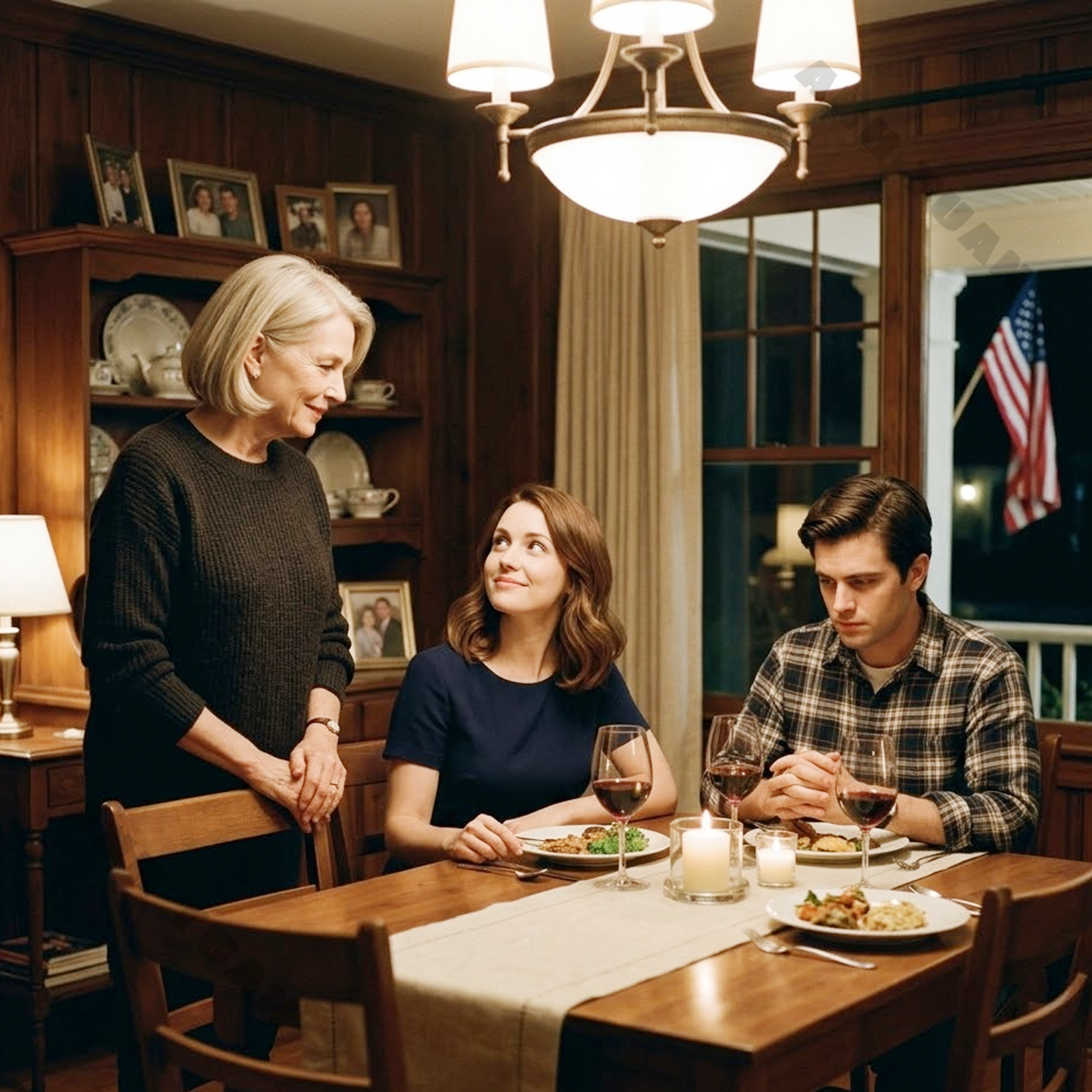
I just told my daughter that after my surgery, I needed time to recover, so I could not keep watching the kids the way I usually did. But instead of a word of sympathy, she coldly said, “Then don’t come back.” That sentence made me realize that the distance between us was no longer just a moment of anger, but a crack that had been quietly growing for a very long time.
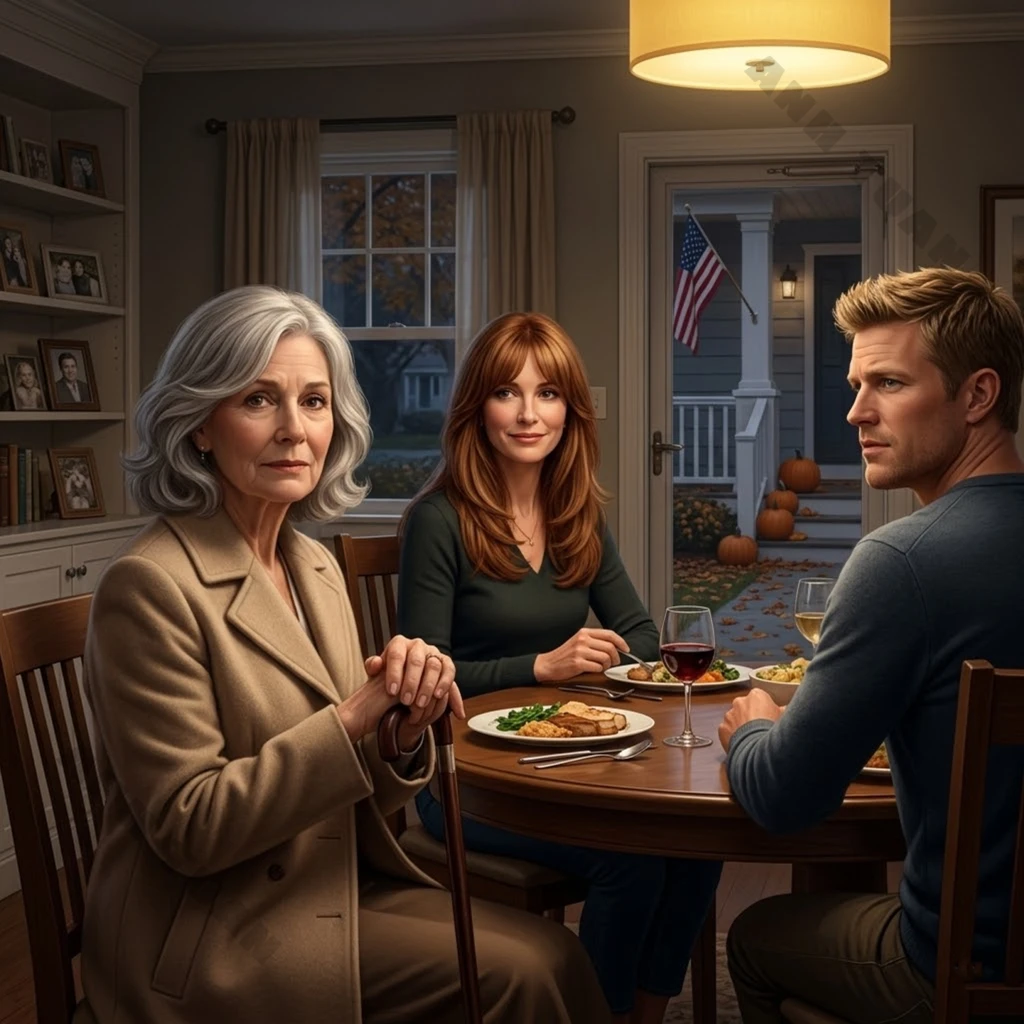
I told my daughter as gently as I knew how that after the surgery, my health still would not be stable for a while and I would not be able to keep taking care of the children the way I had before. I had imagined, foolishly perhaps, that she would hear the tremor in my voice and understand what it had cost me even to say those words out loud. I thought she might remember that I was her mother before I was a pair of spare hands. Instead, she gave me an answer that settled over my heart like wet wool.
“I hope your surgery goes well, Mom, but if you can’t babysit next week, then don’t bother coming back.”
That was the last thing my daughter said before hanging up on me. No goodbye. No take care. No pause in which she might have caught herself and softened. Just something sharp, cold, and final, dropped into the line like a stone. I sat there in my recliner with the phone still warm in my hand, the living room around me gone so quiet it felt staged, as though the whole house had stepped back to watch what I would do next.
Outside, the late-October sky had gone the color of a bruise. Rainclouds pressed low over the neighborhood, over the rows of brick houses and the thinning maples and the little black mailboxes planted at the curb like sentries. My right leg throbbed with that deep, grinding ache that had made walking to the mailbox feel like climbing a hill with sandbags tied to my bones. The next morning I would be at St. Andrew’s Medical Center for a full hip replacement. I should have been resting. I should have been gathering whatever strength an old body can still call home when it is about to be cut open and rebuilt. Instead, I sat there replaying Caitlyn’s voice in my head like a record with a groove worn too deep.
For seventy-three years, I had believed I understood family. I thought being a mother meant giving and then giving again. I thought love was measured in how often you showed up, how much you absorbed, how quietly you made yourself useful. My husband Bill used to tell me, half teasing and half serious, “Linda, you can’t pour from an empty cup.” But Bill had been gone eleven years, and somewhere in those years of widowhood and casseroles and school pickups and emergency checks, I had forgotten that I had a cup of my own.
Caitlyn had not exactly asked me to watch her youngest, Mia, every day after school while she and Jared got their new business off the ground. Asking implies the possibility of no. She had simply spoken as if the arrangement already existed, as if I were a room in the house or a service included in the rent. I had been doing it for six months by then. Pickups from school. Fruit snacks in the car. Homework at the kitchen table. Pasta or grilled cheese or little bowls of tomato soup on chilly afternoons. Some days I had driven in pain so bad I could barely press the gas pedal. But with surgery looming, I told her carefully, calmly, that I would need a few weeks to recover. Only that. Just until I could walk without help. Just until getting out of bed did not feel like hauling a collapsed fence upright.
I expected concern. Or failing that, basic decency. What I got was a silence on the line, and then that sentence.
I lowered the phone into my lap and sat still for a long time. Even the clock on the wall sounded too loud. I did not cry. I almost wish I had, because crying would have meant there was still something in me reaching for her, still some small, stubborn hope that she might call back and say she had not meant it that way. But I did not want anything anymore. Not in that moment. Not after that.
I looked around the living room, really looked. The family photographs on the wall had always comforted me. Caitlyn at her wedding under that white arbor we paid for. The grandchildren sunburned and grinning at the Jersey shore one summer. Bill holding baby Mia with that tired, astonished smile men get when they understand they have become a grandfather before they have quite adjusted to being old. All those smiles looked different suddenly. Less like memories and more like invoices.
The wedding dress. The honeymoon. The condo down payment. The family therapist when things got rocky between Caitlyn and Jared and no one wanted to call it what it was. I had paid for all of it, if not always in money then in labor, in worry, in time shaved off the end of my own life and handed over with a smile. Checks and long drives and trays of lasagna and little envelopes slipped quietly into birthday cards. My body had been falling apart for years under the weight of doing too much too long, and I had called it motherhood.
My overnight bag was already packed for the hospital. Pajamas, slippers, toiletries, a paperback novel I suspected I would be too tired to read. A nurse transport service was set to pick me up in the morning because someone had to, and Caitlyn had not offered. Neither had Jared. Neither had the boys. Mia would have, I thought then with a bitter little flicker of humor. But she was nine.
I pushed myself up out of the chair with a groan. My joints complained so loudly I could have sworn the hallway heard me coming. In the mirror by the front closet I caught sight of my reflection. Gray hair pulled back. The corners of my mouth deeply lined. A softness in my shoulders that had once been strength and now read as fatigue. My mother had looked like that at seventy-three. I remember thinking then that she looked so tired, and being too young to understand that tired can become a whole climate around a woman, a season she lives inside.
On the kitchen counter lay the envelope I had meant to give Caitlyn at Thanksgiving. One thousand dollars toward Mia’s orthodontics. No one had asked. They had only mentioned braces in passing one Sunday afternoon, and I had tucked it away because I thought it might help. I stared at that envelope for a moment, then picked it up and tore it in half. Then in half again. Then again, until it was no longer an envelope but soft little white wounds in my hands.
The next morning the transport nurse arrived right on time. She was cheerful in that measured, professional way that does not feel fake when it comes from someone who has seen real suffering. Her name was Olivia. She held my arm as I stepped down onto the porch, cane in hand, and asked whether family would be meeting me at the hospital.
I smiled the kind of smile women my age learn to use when we are too proud to let a stranger witness the whole of things.
“No,” I said. “It’s just me.”
After she loaded my small suitcase into the trunk, I took one last look at the house. The pumpkins Caitlyn’s kids had carved on my front steps a week earlier were collapsing inward, their crooked toothy mouths softened by weather. I had helped with those too. Scooped out the strings and seeds, wiped the porch, baked pies afterward because autumn was always the season when I forgot my own limits most willingly. Tomorrow, I thought, I would wake up with metal where bone used to be. A new hip. A new wound. Maybe, if God was feeling generous, a new beginning.
But not for Caitlyn. Not anymore.
The hospital room after surgery was too bright and too clean, and it smelled faintly of antiseptic and lemon polish. I lay there half-awake and half-dreaming, a thick bandage over my hip and a deep pulsing ache moving through the lower half of my body like weather through old timber. The clock on the wall ticked away the hours with sterile patience. Olivia appeared again during the shift change, checked my vitals, adjusted the IV, smoothed the blanket over my knees with a hand so practiced it almost undid me.
Around noon she glanced at the door and asked, “No visitors today?”
I shook my head.
“Didn’t expect any?”
She was good enough not to press when I did not answer. Pain has a way of stripping a life down to its truths. Between the anesthesia wearing off and the long vacant hours when there was nothing to do but listen to machines breathe around me, I had no choice but to face everything I had avoided naming. It was not just what Caitlyn said the day before. It was years of small cuts. Years of being taken for granted so politely that I mistook it for affection. Years of being included only where my labor could be folded in seamlessly, like sugar disappearing into hot tea.
After Bill died, I made myself essential. That was the word I used in my own head because it sounded better than afraid. I picked the kids up from school so Caitlyn could stay late at work and angle for a promotion. I loaned her money when Jared’s first business collapsed under the weight of optimism and poor planning. I helped them pack and unpack through three moves in five years, carrying boxes marked KITCHEN and WINTER CLOTHES while my knees burned and my smile stayed fixed. I made myself necessary because necessity felt close enough to love to fool me.
But it is not the same thing. A necessary person is only cherished until she becomes inconvenient. Once she says no, she is revealed for what she has been in the family ledger all along: a function.
It started raining around three that afternoon. Soft and steady. I watched droplets gather on the window in little silver lines, one after another, and thought how age sometimes works the same way. Not in one great collapse, but in quiet accumulations. At four, my phone buzzed on the rolling tray beside me. I picked it up with stiff fingers.
The message was from Mia.
Grandma, are you okay?
That was all. No emojis. No childish spelling. No careless shorthand. Just a small, direct question from a child who had more kindness in her than the adults raising her had remembered how to show. I stared at the words for a long time before answering.
I’m okay, sweetheart. Getting stronger.
She did not reply right away. She was probably in class, I thought. Probably at her desk with her chin in her palm, staring at the clock the way children do when they are waiting for recess or rescue. I missed her then with a force that surprised me. Not because I watched her every day. Not because routine creates attachment. I missed her because when she was near, I never felt like furniture. She looked at me as though I were a person with weather inside me, not just the one who remembered snacks and permission slips.
At five there was another buzz. This time from Jared.
Hope recovery is smooth. Let us know if you need anything.
That was it. A sentence built entirely out of obligation and distance. Not unkind enough to be condemned. Not warm enough to matter. I did not answer.
The first night was hard. Sleep came in fragments. Each hour a nurse appeared. Each beep from the monitor reminded me how quiet the rest of my life had become. I tried to distract myself. I watched the silent television flicker over game shows and local weather. I counted ceiling tiles. I listened to footsteps in the corridor and carts rattling past. But always I came back to the same thought.
What happens when you stop being useful to people who only loved what you did for them?
The answer lay in that hospital bed with me. It lay in the untouched chair near the window and the silence of my phone and the fact that the only gentle hands to hold mine belonged to a stranger on payroll.
By the second morning, the fog of anesthesia had thinned enough for anger to settle where grief had been. Not hot anger. Not rage. Something older and heavier. A rock in the chest. A truth finally heavy enough to stay put.
When Olivia helped me from the bed to the chair by the window, I thanked her, and she laughed softly.
“Strong lady you are,” she said.
I smiled because I knew what she meant, though strength had never felt to me the way people describe it in movies. It had never felt like fire or triumph or standing on a mountaintop with your chin lifted to the wind. More often it felt like stillness. Like enduring the thing in front of you without letting it turn you mean.
Later the physical therapist came in. His name was Brad, and he was perhaps in his mid-thirties, the kind of man who had perfected a professional cheerfulness that would have irritated me if he had not also been so competent. We practiced standing. Then shifting weight. Then a few careful steps with a walker, every movement a negotiation between my will and my pain.
“You’ll be home in a few days,” he said. “You’ve got this.”
I did not tell him that going home meant returning to a silence I was no longer sure how to interpret. Then again, perhaps that was not true anymore. Perhaps silence was not something waiting to swallow me. Perhaps silence could belong to me.
That evening, as the sky beyond the hospital glass turned the dusky pink of a faded seashell, I opened the notes app on my phone and started a list.
Things to cancel.
Weekly grocery runs for Caitlyn.
Mia’s violin lessons.
The monthly utility supplement.
The birthday trip savings transfer for Caitlyn’s fortieth.
The cushion fund I had set up last year, “just in case.”
Each line I typed felt like picking out a stitch in a seam that had held too long and too poorly. And for the first time in years, the unraveling did not frighten me. It felt honest.
The hospital discharged me on a Wednesday afternoon. Olivia helped me into the transport car and, before shutting the door, hugged me with that particular careful tenderness nurses have when they know they are crossing out of procedure and into mercy. She had been the only person to hold my hand through any of it. A stranger, yes, but kinder than my own child had been.
The driver kept the radio low and said almost nothing as we made our way through town. Outside the window, the neighborhood passed in quiet motion. The same brick colonials. The same porches dressed for fall. The same little American flags curling on posts by front steps. The same maple trees dropping leaves onto sidewalks that would need raking by the weekend. Nothing had changed, and yet something had. Not the world. Me.
When we pulled up in front of my house, I sat for a few seconds without moving. My cane leaned against the car door. A dull ache ran from hip to knee. I knew pain would be my roommate for weeks. But that was not what kept me still. It was the house itself, waiting with its closed blinds and its familiar shape. I used to crave the quiet inside those walls. Now I wondered if it would feel like proof of abandonment.
The driver helped me to the porch and stood nearby until I got the key into the lock. When the door swung open, the house met me with the faint scent of lavender polish and stale air. Nothing had moved. No dishes in the sink. No toys on the rug. No signs of interruption. No signs, for that matter, of anyone missing me.
I lowered myself onto the couch and let the silence settle around my shoulders like an old shawl. Then I noticed the envelope on the hallway table. My mail had been held at the post office, and someone had apparently picked it up. Probably Doris from next door. The envelope on top was thick ivory with a gold border and Caitlyn’s handwriting angled across the front.
Inside was a card with daisies on it.
Mom, I hope your recovery is going okay. We’ve had a crazy week. Sorry we haven’t called. Mia says hi. Let us know when you’re back on your feet.
Love, K.
No apology. No warmth. Just enough civility to keep up appearances if anyone ever asked.
I set the card back on the table and looked out the front window at the street. A line had been crossed, but not only by Caitlyn. By me. Something in me had finally stopped waiting.
That night, after taking my pills and heating a can of soup and doing all the ordinary things that make an old woman’s evening look harmless from the outside, I opened the bottom drawer of my desk. I kept financial records there. Old receipts. Gift lists. Copies of checks. I began laying them out one by one.
The forty-five hundred dollars for Mia’s preschool.
The twelve-thousand-dollar “temporary loan” to cover Jared’s failed app idea.
The grocery allowances.
The car repairs.
The deposits into a college account I had started without telling anyone.
I added them up slowly, my reading glasses slipping down my nose. The total was less shocking than the pattern. Every check had a piece of me hidden in it. Time. Care. Fear. I was not just giving money. I was buying my right to remain woven into their lives. And now, even that had been revoked.
The next morning I called the bank. A young woman answered with a pleasant voice and introduced herself, of all things, as Caitlyn. I almost laughed at the coincidence.
“Mrs. Harper, how can I help you today?”
“I’d like to review the automatic payments on my account,” I said. “And then I’d like to cancel most of them.”
We went line by line. As she read each item aloud, I listened closely and stopped her often.
“No, cancel that.”
“That one too.”
“Yes, all of them connected to my daughter’s household.”
There was a short pause.
“Are you sure, ma’am?”
I looked out the kitchen window. Across the street the maple tree had begun to lose its leaves in earnest. Gold and rust drifting down in small surrendering spirals. I thought of how many seasons had passed while I tended everyone else’s weather and ignored my own.
“Yes,” I said. “I’m sure.”
She confirmed the cancellations, made notes for the branch manager, and thanked me for my time as though I had simply moved a utility bill from one account to another. I expected to feel empty afterward. Hollow, perhaps. Or vindictive. Instead I felt clean.
Later that day, Mia called.
“Grandma?”
Her voice came through small and uncertain.
“Hi, sweetheart.”
“Mom said you were tired.”
“I am,” I told her. “But I’m getting better every day.”
A tiny pause. Then, “Can I come over when you’re better?”
I closed my eyes. There was the tender place, the one I could not cauterize.
“We’ll see very soon,” I said.
On Friday morning I opened the curtains wide for the first time in weeks. Sunlight fell across the kitchen table and lit up the grooves in the old oak like rivers on a map. I made myself a real breakfast. Eggs. Toast. Black coffee. Not for anyone else. Not while standing at a stove with one ear turned toward a child asking for juice or a daughter calling from the driveway. Just for me.
The phone did not ring. No one texted to ask if I could pick someone up or cover a bill or make dinner or “just help this once.” It was the quietest my life had been in years.
And it was mine.
Around noon, I reached for the folder I had not opened in a very long time, the one labeled ESTATE in Bill’s neat block handwriting. Inside were the deed to the house, account statements, Bill’s will, and my own old draft, never finalized. There was also a copy of a trust I had once considered setting up when I still believed Caitlyn saw me as a person separate from what I provided.
That had been before the years of polite avoidance turned into expectation. Before my help became, in her mind, something like a subscription service: renewable, unlimited, silent.
I pulled out the blank pages of the old will and laid them on the table. I did not want to think in terms of punishment. This was not revenge. Revenge is hot. It wants to be witnessed. This was something quieter. Something colder and more merciful to myself.
Caitlyn had made her position plain. If I was not useful, I was not wanted. All I was doing now was agreeing with her.
But Mia was different.
That child had spent winter afternoons curled in the corner of my couch reading. She had learned to knit beside me one January while sleet tapped at the windows and the furnace kicked on and off like an old dog dreaming. She had once handed me a bouquet of dandelions wrapped in a paper towel with a note in blocky handwriting that said, YOU ARE MY BEST GROWN-UP. A person cannot forget that.
The phone rang and broke the thought in two.
“Mrs. Harper?”
It was the young woman from the bank again. “I wanted to confirm we’ve completed cancellation of all outgoing transfers linked to the Harper-Bennett household. Also, your investment manager noted that you may want to set up a new trust.”
Sunlight poured over the table. I could see dust motes spinning in it, lazy and bright.
“Yes,” I said. “I want to open a trust in my granddaughter Mia’s name. Managed independently. Protected. She won’t have full access until she’s twenty-five.”
A pause. Then, “That’s very doable. We can begin drafting today. Would you like us to notify the family?”
“No,” I said quickly. “Not yet.”
There was relief in that answer. It felt like cutting a cord that had long since frayed but still dragged behind me.
After the call ended, I walked slowly to the hall closet, reached up with more effort than I liked to admit, and pulled down an old photo box. Inside were pictures of Bill in his work boots, Caitlyn as a baby with a white bow too big for her little head, and one of me in my nursing scrubs holding a newborn Mia, all swaddled and red-faced and furious at being born. I set that photo on the mantel.
That evening, an unfamiliar number flashed on my screen.
“Grandma?”
Mia again, soft and unsure.
“Can I ask you something?”
“Of course, sweetheart.”
A little inhale. “Did you and Mom have a fight?”
“She said you’re mad at us.”
I took a long breath. “I’m not mad, Mia. I’m just making different choices now.”
She was quiet on the other end. Then, in a voice so small it nearly broke me, she asked, “Are you still my grandma? Even if I don’t come over a lot?”
I closed my eyes and pressed my fingers against my forehead. “I will always be your grandma,” I said. “No matter what.”
I could hear her breathing, then a sniffle.
“I miss you.”
“I miss you too.”
After we hung up, I sat in my armchair with the photograph of her in my lap and let the room go dark around me. There was grief in that moment, yes. But there was also peace. For the first time in years, I was not trying to win anyone back.
I was simply standing up.
The following Monday, a letter arrived with no return address, just my name in Caitlyn’s slanted handwriting. I stood at the kitchen counter for a moment before opening it, not with dread exactly but with the tired curiosity of someone picking up a stone she has seen too often to expect anything living underneath. The paper inside was the same soft cream stationery Caitlyn used for thank-you notes when she was little, back when she still dotted her i’s with careful circles and showed me every finished page as if approval were sunlight.
Mom,
I don’t know what’s going on with you lately. Jared and I have tried to be patient, but the lack of communication is getting hard. If this is about the surgery, I already said we were overwhelmed that week. Things happen. That doesn’t mean you need to overreact. Mia is confused. I don’t want her dragged into any tension between us. She’s been asking about you. I’m trying to protect her, but it would help if you could clarify what’s going on. Preferably in person. I think we should have a family meeting and clear the air. Let me know what time works.
K.
No apology. No admission. No acknowledgment that what she had said to me before surgery had cleaved something open that would not close simply because she had decided the timing was inconvenient. Just pressure wrapped in politeness, the kind of control that presents itself as concern so no one can object without looking unreasonable.
I folded the letter along its existing crease and slid it into the drawer where I kept the rest of the things that had become evidence. Bills. Cards. Christmas updates signed too quickly. Thank-yous that thanked me for things I should never have had to do in the first place.
That afternoon I had an appointment with Francis Leland, my attorney. Bill and I had first hired him in the late eighties after Caitlyn was born and we rewrote our wills like so many young parents do, suddenly aware that love on its own does not protect anyone from paperwork. Back then Francis had been fresh out of law school, all bright eyes and crisp shirts and a kind of careful eagerness. Now he was gray at the temples and slower rising from his chair, but still sharp in a way I have always trusted.
He greeted me warmly, helped me settle into the leather chair across from his desk, and said, “I got your message. Trusts, wills, changes. I figured something serious must have happened.”
“It has,” I said.
He waited.
There is a deep kindness in a person who does not rush you into your own pain. So I told him everything. The surgery. The phone call. The canceled payments. The trust for Mia. The will I wanted rewritten.
“No distributions to Caitlyn or Jared,” I said finally. “Nothing.”
Francis leaned back, tapped the pen once against his legal pad, and asked, “Are you certain?”
I met his eyes. “I’m seventy-three. I’ve spent the last thirty years giving without question. I am absolutely certain.”
We spent more than an hour going through language, contingencies, scenarios I had never imagined I would need to consider in relation to my own child. He made measured suggestions. He asked whether I wanted a written explanation attached. He asked whether there were any sentimental items I wished to leave separately. He asked whether I understood how final disinheritance could feel to those on the receiving end.
What I understood, and what I think he heard in my voice, was that I had already lived the more final thing. I had already been reduced in my daughter’s mind from mother to utility. The legal paperwork was only catching up.
When we finished, he leaned forward and said gently, “Most people come in here heartbroken. You don’t seem that way.”
I thought about that for a moment. Then I said, “I was heartbroken for years. Now I’m just done.”
Back home, I made myself a cup of Earl Grey, just the way Bill used to like it, with the bag left in a touch too long and a splash of milk at the end. The house was still quiet. But it no longer felt empty. Emptiness has a pleading quality. This felt earned.
That evening Mia sent me a voice message.
“Grandma, can I come over this weekend? I want to show you the thing I made in art class.”
I listened to it three times. Then I called back and when she answered, I said, “Of course you can, sweetheart. I’d love to see it.”
I did not ask whether her mother knew. At that point, I no longer believed every act of love required permission from the people who had been careless with mine.
Saturday morning arrived with the smell of rain and the little iron creak of my front gate. I was in my armchair with my second cup of coffee when I heard three soft knocks on the door, a rhythm so familiar I knew who it was before I even rose. When I opened it, Mia stood there in a yellow raincoat slightly too big for her, clutching a plastic art folder to her chest.
“Hi, Grandma,” she said, as if it had only been yesterday.
“Hi, love. Come in before you catch cold.”
She peeled off her coat and kicked off her sneakers by the mat, leaving little damp prints on the hardwood. I handed her a towel and she dabbed at her hair with a seriousness that made me smile. Then she moved straight to the kitchen table and laid out her drawings with the solemn care of a museum curator unveiling something priceless.
“We had to pick a word and make art about it,” she told me. “I picked strong.”
There were crayons and watercolor and glitter caught in the paper fibers. One drawing showed a woman with silver hair, a red sweater, and a cane standing on a hill beneath a bright round sun.
“That’s you,” she said simply.
I looked at the picture so long my eyes blurred. “I told my teacher you had surgery,” she went on, “but you didn’t let it stop you. She said that was brave.”
I sat down across from her. “I don’t feel very brave some days,” I admitted.
Mia shrugged in that child way that can make wisdom seem casual. “Brave just means you don’t quit.”
That child. God help me, that child.
We spent more than an hour there together. Drawing. Talking. I made pancakes. She asked me about the scars on my knees, about how Bill and I met at a July Fourth picnic in 1971, about why I kept so many picture frames and not much furniture. I told her because people matter more than sofas, and she nodded as though that made complete sense.
Near noon, she looked up from her syrup-sticky plate and said carefully, “Mom said she didn’t know I came.”
I set my fork down. “I’m glad you came,” I told her. “But you don’t have to lie for me, sweetheart.”
She looked at me very steadily. “I didn’t lie for you. I lied for me. Because I miss you.”
She was too young to be carrying that kind of divided loyalty. Too young to feel she had to sneak toward love as though love itself were contraband. And I hated that the adults around her had made that necessary.
When she left that afternoon, I gave her a worn copy of The Secret Garden from Caitlyn’s childhood. Her whole face lit up. After the door closed behind her, I stood for a long moment with my hand still on the knob. The ache I felt then was not loneliness. It was recognition.
Mia was my mirror, though not in the obvious ways. Not in her face or her mannerisms. In spirit. In attentiveness. In the way she noticed what mattered and held it carefully.
That night I received another letter, this one typed and signed by Jared.
Linda,
Caitlyn is very upset. She says you’ve been distant, possibly even manipulative toward Mia. We think it’s best if communication goes through us from now on. You’re welcome to visit, but we’ll need notice and only when appropriate.
I stopped reading halfway through and folded it closed. The nerve of him. The way he positioned himself as gatekeeper to a child I had rocked to sleep, spoon-fed soup to, taught how to whistle in my backyard one windy spring afternoon. He was speaking to me as though my love were a liability to be managed.
I put his letter in the same drawer as Caitlyn’s and did not reply. There would be no more explanations. No more self-defense. No more carefully worded attempts to sound reasonable to people who were only interested in my reason when it agreed with theirs.
On Monday morning, I made a list. Not groceries. Not errands. A reckoning. People who had known what I was going through. People who had not asked. People who had asked once and then vanished. People who only called when they needed something. And the one small person who had shown up in the rain just to draw with me and eat pancakes and tell me I was strong.
I did not need to write their names.
That afternoon Francis came by with the documents. The new trust for Mia. The updated will. Clauses clean and precise enough to protect what Bill and I had built from hands that remembered me only when it was useful. I baked scones before he arrived, not because I was hosting anyone in particular but because there is comfort in the rhythm of making something from scratch. Flour on the counter. Cold butter cut in. The soft dull thud of dough against a board. There are days when a woman keeps herself together not through prayer, not through insight, but through ordinary domestic acts done slowly and well.
Francis laid everything out across the kitchen table page by page. The legal language was tidy and severe. When we reached the disinheritance section, he paused.
“You understand this is irreversible, Linda. You’re removing both Caitlyn and Jared from any future claims.”
“I understand.”
“I’ve seen people change their minds.”
“I won’t,” I said. “She already asked me to leave. I’m just agreeing.”
He looked at me for a long second, then nodded.
When everything was signed and notarized, he packed his briefcase and stood. “I don’t say this often,” he told me, “but I’m proud of you.”
Proud. I had not heard that word from Caitlyn in so many years I could not remember the last time. After he left, I sat at the table with the smell of lemon cleaner and baked dough still in the air and looked around the room. The house was not grand. It was not stylish. The cabinets needed repainting. The bathroom tile had been outdated since the Clinton administration. But it was mine. Bought with two salaries. Kept afloat after Bill died by extra nursing shifts and prudent living and sacrifices I never once announced like sacrifices. A home that had fed people, sheltered them, steadied them.
And now, for the first time in a very long time, it was truly mine again.
That evening the phone rang. I let it go to voicemail. Then it rang again. Blocked number. After it stopped, I listened.
“Mom, I heard about the changes you made. I don’t know what this is all about, but it’s not fair. You’re cutting yourself off from your family, from your legacy. You’re hurting Mia. Call me back.”
There it was again. Legacy. As if I were a trust fund with a pulse. As if love could be tallied in balances and beneficiary lines. I saved the message not because I intended to replay it but because sometimes a woman needs a record of the exact tone someone used when they mistook her silence for weakness.
That night I slept straight through until morning.
Wednesday brought the first true cold snap of the season. Wind pressed against the windows and rattled the bare branches outside. I wrapped myself in Bill’s old cardigan, the one that still smelled faintly of cedar and the ghost of pipe tobacco, and sat by the fire with a cup of tea. The signed documents were sealed in the file cabinet beside me. Around noon, the doorbell rang.
I stood slowly, cane in hand, and peered through the glass pane.
Mia.
She stood on the porch in a navy coat with the hood pulled low, a sketch pad tucked under her arm.
“I told Mom I was walking to the library,” she said when I opened the door. “It’s only three blocks. Is that okay?”
“Of course it is.”
Inside, she kicked off her boots and sat at the kitchen table while I made hot chocolate the way she liked it. Milk, not water. Two marshmallows. Stirred clockwise because she had once decided that made it taste more like winter and I had never corrected her. She watched me for a while, then asked, with the grave curiosity of the young, “Did you really change your will?”
I looked at her over the rim of my mug. “Yes,” I said. “Why?”
She thought about it. “I heard Mom say you were trying to punish her.”
“Do you think I’m punishing anyone?”
She shook her head. “No. I think you’re just tired of giving.”
The truth of it settled between us like dust in sunlight.
“Sweetheart,” I said, leaning forward, “I didn’t do this to hurt anyone. I did it to stop hurting myself.”
She nodded as though that answer made sense to her. Then she flipped open her sketch pad and showed me a charcoal drawing. Two women sitting across a table. One small, one older. A window behind them. Steam rising from mugs.
“That’s us,” she said.
My throat tightened. “It’s beautiful.”
Then she reached into her coat pocket and set a small velvet pouch on the table. Inside was a thin silver bracelet with a tiny maple-leaf charm.
“I know I can’t give you money or big stuff,” she said, “but I bought this at the school fundraiser because you always say the tree outside your window is the prettiest thing in fall.”
I held that bracelet as carefully as I had once held her first lost tooth wrapped in tissue. “This is the most precious thing I’ve been given in a long time,” I told her.
After lunch, grilled cheese and apples, she helped me organize the junk drawer in the hall. Rubber bands, spare buttons, dead batteries, twist ties, mystery keys from houses we no longer owned. She turned it into a game. When it was time for her to leave, I walked her to the porch.
“You know,” she said quietly, “even if Mom says I can’t come anymore, I’ll find a way.”
I cupped her cheek. “I’m not going anywhere, Mia. I just stopped waiting to be seen.”
That night I did not think about Caitlyn or Jared. I thought about a child walking three blocks in the cold to bring me a drawing and a bracelet and a kind of loyalty adults often forget how to practice.
The next day I turned off my phone. Not in anger. Not as performance. I just needed one full day of silence that was not waiting to be broken. Instead of scrolling through messages I did not want to answer, I pulled out a knitting project I had abandoned months before: a baby blanket in soft lavender wool. I had started it when Caitlyn mentioned a friend’s pregnancy and asked if I could “whip something up.” Then the request had been forgotten, like so many things handed my way. I worked on it for hours, stitch after stitch, letting the repetition calm me.
Around four there was a soft knock at the door. It was Doris from next door, holding a container of chicken stew in both hands and wearing the same lavender coat she had owned for years.
“You’ve been on my mind,” she said.
We sat at the kitchen table while the stew steamed on the counter and tea cooled between us. Doris had known me long enough to recognize the difference between tired and changed.
“You doing okay, Linda?”
I could have lied. Women of my generation are fluent in fine. But there was something undemanding in her face, and that made honesty feel safe.
“I’m starting to be,” I said. “But it’s been hard.”
She reached across the table and laid her hand over mine. “You’ve been everything to that family for too long. It’s okay to stop. You don’t owe anyone your whole life.”
I swallowed and nodded. “I think I confused being needed with being loved.”
“A lot of us do.”
We sat in a silence that felt companionable rather than empty. Before she left, Doris stood in the doorway and said, “If they come knocking with guilt in their hands, remember this moment. The peace in your own home. Don’t trade it for anything.”
After she left, I stood there longer than I meant to, hearing her words more clearly than any voicemail I had saved. That evening I turned my phone back on. Five missed calls. Two from Jared. Three from Caitlyn. One new voicemail. I did not listen. Instead I texted Caitlyn:
Please stop calling. I need time. I’ll reach out if and when I’m ready.
No explanation. No softness. Not cruelty either. Just a clean sentence with no room for argument.
Sunday morning I woke early because I wanted to, not because pain or habit dragged me up. The house felt different in the morning light. Not the silence of absence. The silence of a blank page. I made oatmeal with cinnamon and brown sugar and half an apple chopped small, the way Bill liked it. After breakfast, I opened the cedar chest at the foot of my bed. Inside were old letters, Bill’s watch, a faded concert ticket from 1974, and the hospital bracelet from the day Caitlyn was born. Beneath it all lay my journal.
The last entry was from six years earlier, the night I co-signed the second mortgage on Caitlyn’s house. I had written about the relief in her voice, the hope in her eyes. I had not written about how I cried afterward, wondering if I would ever see that money again, or how she never mentioned it once the papers were signed.
I turned to a fresh page and wrote:
October 15.
I’ve spent most of my life being useful. Today I am none of those things. And for the first time, I think I might be free.
Later I sat in the backyard under the maple and watched leaves come down in gold and rust. I used to rake them into piles for the children. Now I let them fall. That afternoon, Caitlyn sent an email with the subject line Disappointed Mom. She accused me of being selfish. Claimed Mia was hurting. Said they were trying their best and I was making things hard. I did not reply.
That evening, Mia called in a whisper.
“I’m not supposed to be on the phone.”
“I’m glad you are.”
“Why are you and Mom fighting?”
“It’s not a fight, sweetheart,” I said. “Sometimes people grow apart even when they don’t want to.”
“Will you come to my winter concert?”
I looked out at the darkening yard. “I’ll try. But I need to know I’m welcome first.”
“I want you there.”
“That’s enough for me.”
Then she said, very quietly, “I wish I could live with you.”
A lump rose in my throat. “Me too,” I said. “But you carry me with you. Just like I carry you.”
I had spent years living as an extension of other people’s needs. In that quiet, something else had begun to grow.
The mail arrived late that Monday. I was at the sink washing dishes when I heard the flap of the mailbox and the soft thud of envelopes hitting the hallway floor. There had been a time when mail still carried a pulse of hope. Maybe a handwritten note. Maybe a birthday card with a thoughtful sentence inside. Maybe some apology that had finally learned to say itself. By then, I knew better. The stack was the usual mix of utility bills, advertisements, and a magazine I never subscribed to. Tucked among them was a thick envelope with Jared’s narrow, exact handwriting.
Inside was a printed letter clipped to several pages of typed notes. Charts. Columns. References to “shared responsibilities” and “informal commitments” and “co-investments,” phrases that made me laugh out loud in the empty kitchen because there is something almost absurd about watching a man try to legalize ingratitude. It read like a preemptive defense, a case being built against a woman whose only crime was saying enough. At the bottom he had written, We hope you will reconsider your recent decisions. Family should operate on trust, not retaliation.
Retaliation.
I sat down at the table and folded the pages neatly, pressing each crease flat with my palm. Once, that word would have hooked into me. I would have called Caitlyn. I would have explained. I would have tried to sound fair and generous and impossible to blame. But by then I was too tired of the performance. I wrote one sentence on a yellow sticky note and pressed it to the refrigerator.
Dignity isn’t retaliation.
Around four, Doris came by again with warm cinnamon rolls wrapped in a dish towel. We sat on the porch and watched the sun drop behind the rooftops while the air turned sharp enough to sting my lungs.
“You look lighter,” she said. “Like you finally put something down.”
“I did,” I told her. “A few things.”
She glanced toward the envelope still lying on the kitchen table inside. “More family trouble?”
“Attempts at negotiation.”
Doris snorted softly. “That’s a word for it.”
We drank our tea in peace. She did not pry. I did not elaborate. At my age, you learn that friendship is often measured by what a person refuses to force from you.
That night I lit a candle on the windowsill, not for ceremony, simply because I wanted warmth. The house smelled like cinnamon and old wood and quiet choices. Passing the hallway mirror on my way to bed, I caught my reflection mid-step and stopped. Hair silver. Sweater loose. Eyes sharper than they had been in years. There was less softness in my face now, but I no longer mistook softness for virtue.
Thursday brought an unexpected visitor.
I was halfway through sorting the linen closet, finally throwing out pillowcases I had meant to mend for ten years, when the doorbell rang in three clipped little bursts. Through the front window I saw Caitlyn standing on the porch alone. No Jared. No children. Just my daughter, arms crossed and chin lifted in that way she has when she is trying to prepare herself to be right.
I did not open the door immediately. She rang again. I counted slowly to ten, not from spite but to decide what I owed in that moment. An answer. An opening. A hallway she had not walked down in months unless she needed something.
Then I opened the door.
“Caitlyn.”
“Hi,” she said, as if it were almost a question. “Can I come in?”
I stepped aside.
She walked into the living room and perched on the edge of the sofa like a guest in a model home. Her eyes moved over the room, over the books, the old photographs, Bill’s chair by the lamp. I wondered how long it had been since she had really looked at any of it. Since she had seen the place where her life had once been held safely before she grew into the habit of treating safety like background noise.
“I thought we could talk,” she said.
“Talk.”
She took a breath. “I know you’re upset, but this division, this punishment, it’s too much.”
I said nothing.
“I just don’t understand why you’d cut off everything. The trust, the help. You know we’ve been under pressure. Jared’s business is still—”
I lifted a hand.
“Stop.”
She blinked. I am not sure I had interrupted her like that since she was fourteen.
“I didn’t ask you here,” I said evenly. “And I didn’t cut off everything. I stopped funding a lifestyle that excluded me.”
Her jaw tightened. “You stopped being a mother.”
I looked at her. Forty-two years old. Polished. Efficient. Beautiful in the way magazine women are beautiful when they are too tightly arranged. Brittle around the edges.
“No,” I said. “I stopped being a servant.”
“That’s not fair.”
“Neither was being told not to come back if I couldn’t babysit while recovering from surgery.”
She looked down. “That was one moment.”
“No,” I said. “It was a culmination.”
Caitlyn leaned back, folding her arms across her chest. “I didn’t come here to fight.”
“Neither did I.”
“So what do you want, Mom?”
The words came out like a dare.
I took a breath and answered carefully, because I wanted the truth more than I wanted to wound her. “I want respect. Not because I paid for your wedding or helped raise your children or kept you afloat more times than you will ever admit. I want respect because I am a person. Not a resource. Not a backup plan. Not a placeholder.”
She blinked quickly and looked away. “Mia misses you.”
“I miss her too.”
“She’s asking questions I don’t know how to answer.”
“Then be honest.”
She stood so abruptly the cushion shifted behind her. “I don’t think you realize what you’ve started.”
“I do,” I said. “I started putting myself back together.”
For a moment she just stood there, hands hanging uselessly at her sides. Then she walked to the door. Before leaving, she turned and said, “I don’t agree with how you’ve handled this.”
“I didn’t ask for agreement.”
The door clicked shut behind her. I stood in the silence she left and rested one hand on the table until my breathing settled.
Later that night, Mia texted.
Mom says you’re mad at her. Are you mad at me too?
I answered at once.
Never. Some things don’t change.
The next morning I opened the curtains early and let pale light pour over the living room. Dust moved through it in soft drifting currents. I made coffee and forgot to drink it while I pulled open the bottom drawer of the secretary desk. At the very back was a small envelope with my mother’s name on it. Eleanor Weller. She died when I was twenty-six. I had not opened the envelope in decades.
Inside was a note in her handwriting.
Being a mother is a long goodbye. Let go gently, but don’t disappear.
I sat there for a long time with that line in my hands. All those years I had thought letting go meant vanishing. I thought if I loosened my grip even a little, I would lose my place entirely. So instead I clung to the tasks, the favors, the financial rescues, the endless usefulness of me. I had not let go gently. I had held on until I broke.
Then I put the note away and pulled out fresh paper. This time I wrote to Mia.
If you ever find this one day, I want you to know I never stopped loving you. Even when the adults around us made it complicated. Even when silence filled the rooms. I stepped back from certain things not because I stopped caring, but because I finally started caring for myself too.
I did not sign it. Some truths are clearer when they arrive later.
That afternoon an email arrived from the bank confirming that the trust for Mia had been finalized. The language was dry, but the meaning was simple. Her future would be protected. Not controlled by her parents. Not dependent on their moods or mine. Quietly waiting for her.
I printed the documents, filed them away, and baked a lemon cake, the one I used to make on Bill’s birthday every year. By dusk, I saw Mia through the front window, wobbling her bike up the path, cheeks pink from the cold, helmet slightly crooked. I opened the door before she could knock.
“I smelled cake,” she said.
“You’re right on time.”
We sat at the kitchen table and shared slices while she told me about her art teacher, a new friend who loved fossils, and her secret wish to become a writer. I listened as if each word were a small bright coin. When she finished, she pulled a crumpled drawing from her backpack. It showed a large tree with deep roots spreading beneath the ground.
“This is you,” she said. “You don’t fall over when the wind comes.”
I could not speak for a moment. I simply reached for her and held her there in the quiet of a house no longer defined by what it had lost, but by what it had chosen to keep.
On Sunday I put on my good coat and walked two blocks to the old church with the tall oak in front. I had not been inside since Bill’s memorial service. The pews were mostly empty. A few quiet people scattered through the sanctuary like punctuation. I did not go there to pray, not exactly. I went because that room had once taught me something about stillness, and I wanted to sit where I had once felt held.
For years I thought forgiveness meant returning to the same seat even after someone had shoved you from it. I no longer believed that. Sometimes forgiveness is not reunion. Sometimes it is simply walking away without bitterness and refusing ever again to hand someone the power to knock you down.
When I got home, a text from Caitlyn waited.
We’re going out of town next week. Mia wanted to ask if she could stay with you.
No apology. No ownership. Just another request dressed as normalcy.
I looked at the screen for a long time. I thought of the hospital. The voicemail. The canceled payments. The changed will. The years of love translated into labor as though labor were all I had to offer. Then I typed back:
Mia is always welcome in my home. You, however, are not entitled to ask anything of me. If she needs me, she knows how to reach me.
An hour later Mia called, whispering as if she were hiding under blankets.
“Grandma, did you say yes?”
“I said you could come anytime, sweetheart.”
She sighed with such relief that I laughed. “Good,” she said. “Because I already packed.”
That week with her felt like sunlight in winter. We made pancakes every morning and read together at night. She helped me sort the attic, where we found photographs of Caitlyn as a little girl in pigtails holding a garden hose and scowling into the sun. Mia laughed until she hiccuped.
“She looks like me.”
“You look like yourself,” I told her. “Though maybe the best parts came from places your mother forgot.”
One afternoon she found the lavender blanket draped over the armchair and asked if it was for her.
“No,” I said. “It’s for the girl who reminded me I’m still here.”
She looked puzzled for one second and then smiled. “I know who that is.”
On Mia’s last morning, dawn came silver and thin through the windows. I stood for a moment in the den doorway watching her sleep on the pullout bed, one foot sticking out from under the blanket I had finished for her after all. She looked so much like Caitlyn had at that age that it hurt, and yet she was entirely her own person.
At breakfast she looked up from her toast and said, “When I grow up, I’m going to buy you a house next to mine so we’re never far.”
I smiled into my coffee. “That’s beautiful, but I don’t need a new house. I just need you to live a life where you don’t forget who you are.”
She tilted her head. “How would I forget that?”
“You’d be surprised,” I said. “The world whispers things to women. That they owe. That they should make themselves useful. That love means disappearing for everybody else. Before you know it, you’ve traded all your time and softness for scraps of approval.”
She listened in that solemn way children sometimes do when the truth comes to them before they can name it.
“I don’t want that,” she said.
“Then don’t give anyone the pen to write your story,” I told her. “Not even the people you love.”
When Caitlyn came to pick her up, she stayed in the car. Mia hugged me long and hard on the porch.
“I’ll call every week,” she whispered.
“I’ll answer every time.”
Then she drew back and said, “Don’t disappear, okay?”
“I won’t. But I also won’t stand still for people who don’t see me.”
She nodded, eyes bright, and ran to the car. I did not wave as they drove away. I stood in the doorway, shoulders straight, and watched until the taillights turned the corner.
Later that afternoon, I sat down with a fresh notebook. The cover was plain. The pages clean. On the first line I wrote:
This is not the story of a woman who was cast aside.
This is the story of a woman who stopped asking permission to be whole.
It was not polished, but it was true.
That evening Doris came by with tea. We sat in silence for a while, the kind that exists between people who no longer need to fill every empty space with reassurance.
“You really done with them?” she asked at last.
I thought about it carefully. “I’m done waiting for them to become people I can belong to.”
She nodded. “That’s enough.”
We sat there, two old women in a quiet house, holding space for the parts of ourselves we had once handed away too easily. And I knew then that I was no longer lonely. Alone, perhaps. But not lost. Not invisible. Not less.
Just here. Still standing. Still me.
Maybe that is what boundaries really are when you get old enough to tell the truth about them. Not punishment. Not revenge. Just the line between where your love ends and your erasure begins. Maybe the hardest part is not setting the boundary at all, but accepting how many people preferred you before you had one.
And maybe the question worth asking is this: if someone only knows how to love you when you are useful to them, was that ever love in the first place?
If you’re still here, thank you. That means more than you know.
Hit subscribe if you want to hear more stories like this one. Drop a comment and tell me, have you ever had to set a boundary with family.
Until next time, take care of yourself.